Energy costs for businesses in 2026 will look completely different than in recent years. In recent weeks, many publications have appeared suggesting that in 2026, some companies may still pay less for electricity – provided they submit the appropriate declaration. This is true. But only partially. The problem is that most of these materials omit the broader context:
Energy costs for businesses in 2026 will look completely different than in recent years. In recent weeks, many publications have suggested that in 2026, some companies may still pay less for electricity – provided they submit the appropriate declaration.
This is true.
But only partially.
The problem is that most of this material omits the broader context: how energy costs for businesses are actually shaped and what will determine them in the coming years.
And this leads to wrong business decisions.
Energy Price Declaration and What It Actually Means for a Company
The declaration mechanism functions as part of the energy consumer protection system, which was introduced in response to the price crisis. From a company's perspective, however, it is not a tool that influences the real cost of energy, but a formal solution that allows for the maintenance of specific settlement conditions.
In practice, submitting a declaration means that the company does not lose access to preferential settlement rules. Failure to submit it may result in automatic transition to less favorable terms and higher costs. However, this does not mean that the company starts "paying less" in a market sense – it only means that it avoids negative administrative consequences.
This distinction is crucial. The declaration does not change how the company consumes energy, does not affect its consumption profile, nor does it limit its exposure to market volatility. It is a protective, not an optimizing, tool. As a result, a company may feel it has control over costs that are actually beyond its influence.
Why is the "cheaper electricity" narrative in 2026 misleading?
From an entrepreneur's perspective, the total cost of energy matters, not just one element of it.
And this cost consists of several layers:
– energy price (trading / tariff),
– distribution costs,
– system fees (including capacity charges),
– indirect costs resulting from the market (CO₂, balancing, volatility).
And this is where the problem lies. In practice, energy costs for businesses in 2026 will depend not only on the energy price but on the entire fee structure.
Even if energy itself (in terms of unit price) temporarily falls or is "maintained" at a lower level administratively, then:
– other components of the bill are increasing,
– energy market volatility is returning,
– and the price protection system is gradually being phased out.
As a result, a company may have the impression that it is "paying less," while its exposure to energy risk is actually increasing.
2026 – Return to the Market, Not Stability
The year 2026 marks a fundamental change in how the energy market operates for businesses. Intervention systems that have limited the impact of price fluctuations on end-users in recent years are being gradually phased out. In their place, the market mechanism is returning – with all its potential, but also its risks.
In practice, this means greater dependence of energy costs on wholesale prices, which are subject to dynamic changes. These prices are influenced by, among other things, CO₂ emission costs, the situation in commodity markets, and the balance of energy supply and demand in the system. For businesses, this means one thing: the cost of energy ceases to be a stable, predictable element of the budget.
However, this is not a return to "normalcy" understood as stability. It is rather an entry into a new phase where volatility becomes the norm. Companies that have so far operated under partial protection must begin to consider the realities of the energy market in their operational decisions. Otherwise, they will be reacting to cost changes instead of managing them.
What Really Affects a Company's Energy Bill Today
From an operational perspective, three areas are key for a company:
1. Energy Consumption Profile
Not just how much you consume, but when. Peak hours, uneven load, lack of control over consumption – these generate costs.
2. Cost Structure
Elements that the company has no direct influence over (system fees, distribution) are taking up an increasing share of the bill.
3. Lack of Flexibility
Most companies lack the tools to respond to energy price volatility.
And it is this third point that is becoming critical today.
Why Administrative Mechanisms Alone Are Not Enough
Administrative mechanisms, such as price freezes or declaration systems, play an important stabilizing role in crisis situations. However, their essence is short-term protection, not a long-term solution to the problem of energy costs in companies.
From a company's perspective, the key is that these solutions operate independently of the organization's actual functioning. They do not take into account the specifics of production processes, the energy consumption profile, or optimization possibilities. This means that the company remains a passive energy consumer, without tools to actively influence its costs.
In the longer term, such an approach generates risk. When protective mechanisms are limited or withdrawn, the company is fully exposed to market forces without a prepared strategy or infrastructure for adaptation. Therefore, administrative solutions can be a transitional element, but they cannot form the foundation of energy management in a company.
How Companies Are Actually Starting to Control Energy Costs
An increasing number of companies are moving away from an approach where energy is treated solely as a fixed cost over which they have no influence. Instead, they are beginning to see it as an area that can be analyzed, optimized, and actively managed – similar to logistics or production.
The first step is to understand that energy cost is not solely due to its quantity, but to the time and manner of its consumption. Two companies with identical annual consumption can incur completely different costs if their consumption profiles differ over time. It is precisely this variability that opens up space for optimization.
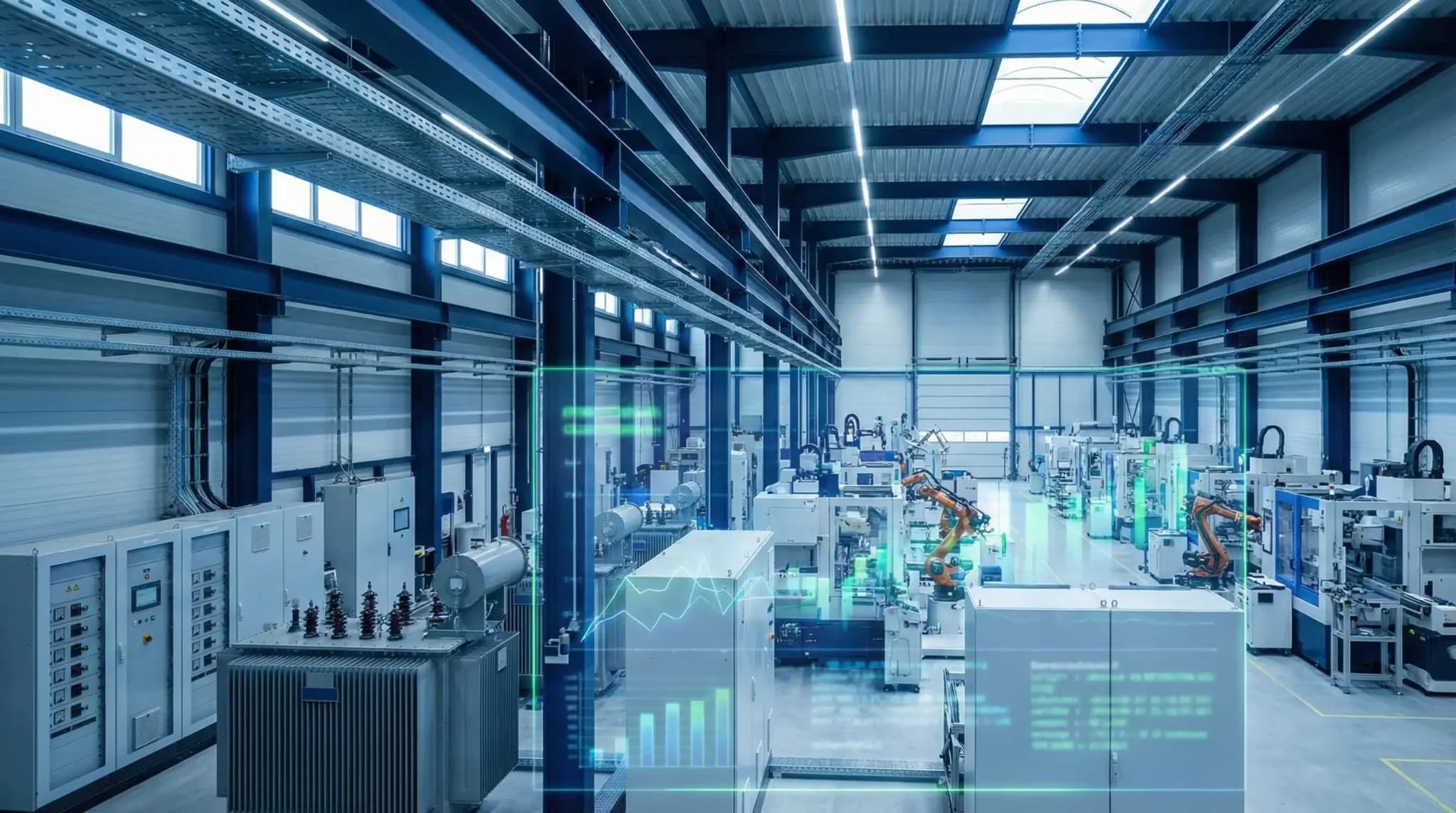
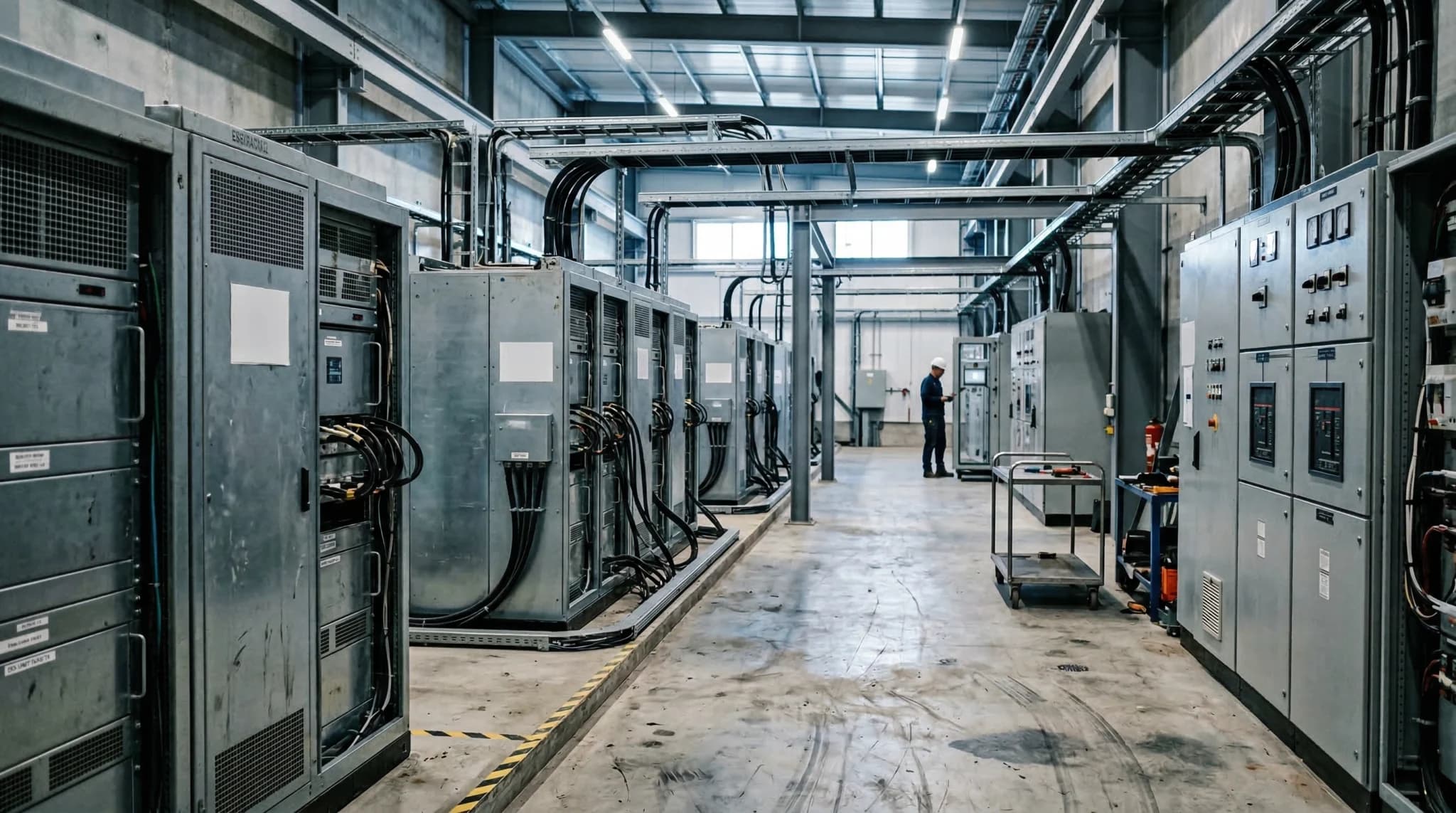
In practice, this means implementing solutions that allow for responses to market and operational conditions. Energy storage systems enable the reduction of consumption during periods of highest load, limiting costs resulting from peak demand. Energy Management Systems (EMS), on the other hand, allow for real-time analysis of consumption and adjustment of equipment or processes to current conditions – both technical and price-related.
The integration of these elements is of key importance here. An energy storage system alone without a management system will operate in a limited way, just as EMS without the ability to physically intervene in energy flow. Only the combination of these solutions creates a system that truly impacts costs.
Companies that implement such an approach gain several significant advantages. First and foremost, they reduce the impact of sudden energy price increases on their financial results. Additionally, they increase cost predictability, which is directly relevant for budget and investment planning. In many cases, there is also an opportunity to use energy more efficiently, which translates into real savings.
It is worth emphasizing that this is not a universal solution for every company. The greatest effects are achieved by companies with high and variable energy consumption, where there is room for optimizing the consumption profile. In such cases, transitioning from a passive energy consumer model to an active management model becomes not so much an option as a necessity.
When It Makes Business Sense
Not every company needs advanced energy solutions. Three things are key here: the scale of consumption, its variability, and the share of energy in operating costs. The decision should be based on data, not on trends.
The greatest business sense emerges where energy truly impacts profitability and where there is room for optimizing the consumption profile.
This most often applies to:
– manufacturing companies,
– companies with high and irregular energy consumption (peak demand),
– plants operating in shifts or continuously,
– organizations that want to increase cost predictability.
Conversely, it makes less sense in the case of:
– small service companies,
– stable and low energy consumption,
– situations where energy is not a significant cost.
The line between these groups is not always clear. Therefore, an analysis of the actual consumption profile is crucial – only then does it show whether the investment is business justified.
Summary – What Energy Costs for Businesses in 2026 Mean
2026 is not a moment when energy will suddenly become cheaper. It is a moment when the period of relative protection ends, and companies return to market realities with all their consequences.
Submitting a declaration may help reduce costs in the short term or avoid less favorable settlement terms. However, it does not change the fundamental problem, which is the lack of control over energy consumption and exposure to price volatility.
In practice, this means a change in approach. Energy ceases to be a cost that is "simply paid," and begins to be an area requiring conscious management. Companies that stick to a passive model will increasingly react to rising costs. Those that approach the issue strategically will gain an advantage – both cost and operational. Therefore, 2026 is not a question of how much you will pay for electricity. It is a question of whether you have influence over how much you will pay.
Our Opinion
From our perspective, the biggest challenge for companies today is not the energy price itself, but the lack of real control over this cost. In recent years, the market has accustomed businesses to the fact that prices can be partially regulated administratively. This has created a certain comfort – but at the same time, it has diverted attention from building one's own energy strategy.
This phase is ending today.
With the return of market mechanisms, energy ceases to be an "external problem" and becomes an element that directly affects a company's competitiveness. Companies that do not analyze their consumption and do not have tools to optimize it will increasingly react to costs instead of managing them.
From our experience, the biggest change is not the technology itself, but the mindset. Companies that begin to treat energy as a resource to be managed – rather than just a cost to be paid – quickly identify specific areas for optimization. It often turns out that the potential for savings does not come from one large investment decision, but from a series of conscious, data-driven actions.
Therefore, at Technius, we do not look at energy solely through the lens of price per kWh. We look at the entire system: the method of consumption, the moments of demand, the cost structure, and the possibilities for their real reduction. Only such a perspective allows us to talk about conscious energy management in a company – and not about reacting to further market or regulatory changes.
Check if Your Company is Overpaying for Energy
If energy is a significant cost for your company, it's worth calculating.
At Technius, we start by analyzing:
– energy consumption profile,
– cost structure,
– optimization potential (ESS + EMS),
and we indicate whether the investment makes real business sense.
Check the savings potential in your company for free:
https://technius.pl/optymalizacja-kosztow-energii-dla-firm/
About Technius
We help companies cut energy costs — from audits and analyses to deploying energy storage and EMS systems. Our team has delivered hundreds of projects, saving clients millions of zloty.
Meet us