Europe is stronger today than in 2022. But still vulnerable to energy price volatility Energy prices for companies are once again under pressure. The situation in the Middle East is again increasing the risk of price increases on the energy market. The European Commission does not rule out protective measures if the geopolitical situation translates into rising energy prices. From the perspective of businesses, however
Europe is stronger today than in 2022. But still vulnerable to energy price volatility
Energy prices for businesses are once again under pressure. The situation in the Middle East is increasing the risk of energy market upticks again. The European Commission does not rule out protective measures if the geopolitical situation translates into rising energy prices.
From a business perspective, however, this is only part of the picture. Because although Europe is in a better situation today than during the 2022 energy crisis, the risk of energy costs has not disappeared – it has only changed its form.
The EU has reduced its dependence on Russia. But not on global energy crises
One of the most important achievements of recent years has been the successful diversification of gas supplies. Data published by the Council of the European Union clearly shows that Russia's share in gas imports to the EU has fallen from around 40% in 2021 to single-digit levels in 2025 for pipeline gas. Even taking LNG into account, this share is many times lower today than before the crisis. This is a fundamental change that has increased Europe's energy security.
At the same time, however, this change does not mean independence from the global energy market. On the contrary – Europe has become an even greater part of the global energy commodity trading system. This means that energy prices for businesses in Europe are today sensitive not only to the local situation but also to global events. And this is precisely what we are observing now.
The energy market reacts instantly to geopolitics
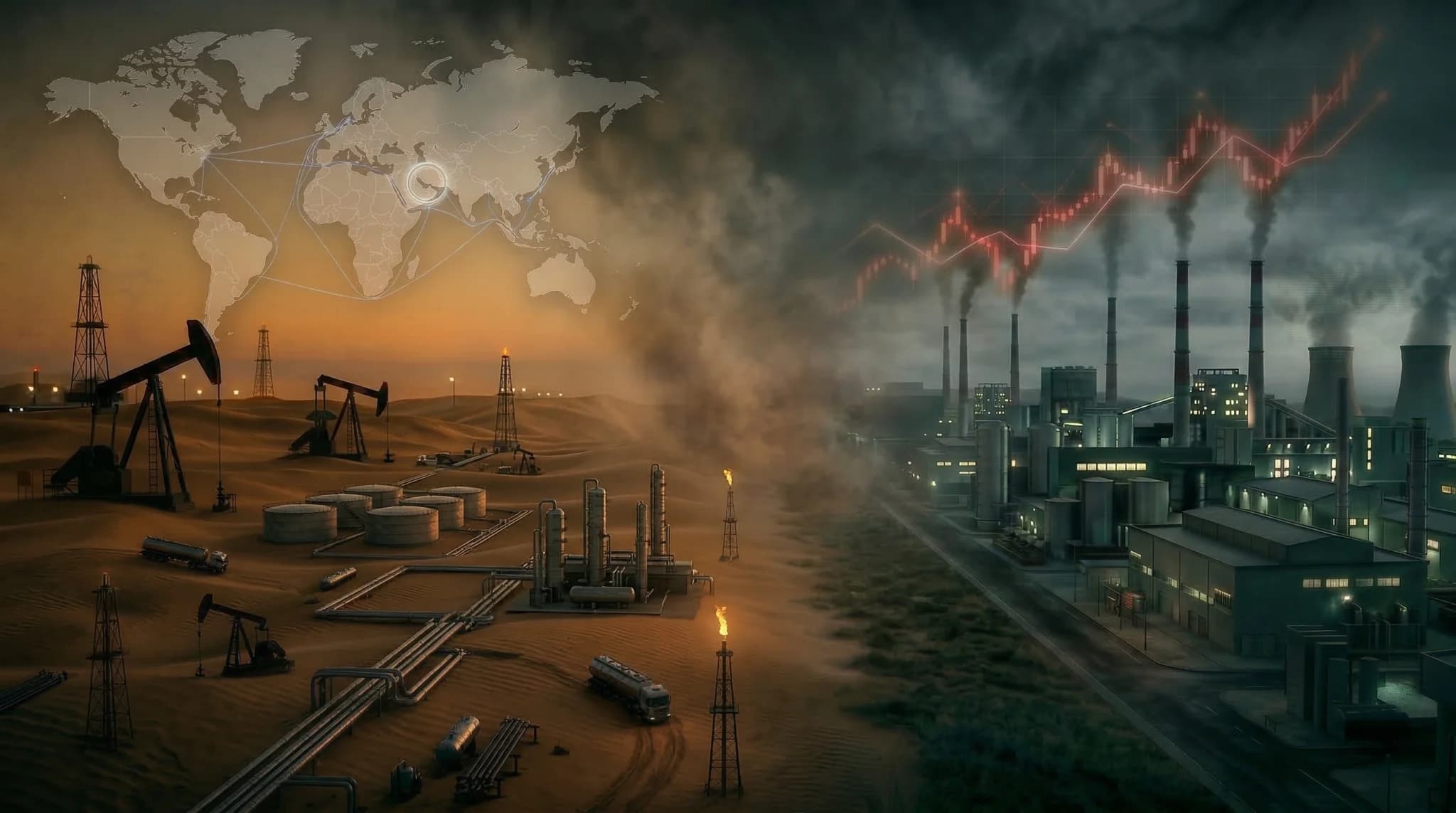
The International Energy Agency noted in the first weeks of tensions in the Middle East the need to activate stabilization mechanisms in the oil market. The decision to release large volumes of crude oil from strategic reserves is not a symbolic action – it is a real intervention aimed at limiting sharp price increases.
At the same time, the Agency emphasizes that these are short-term measures, and the further development of the situation depends on the security of key transport routes, such as the Strait of Hormuz.
For businesses, this means one thing: the energy market reacts instantly to geopolitical events, and their effects quickly appear in the operating costs of companies.
New reality: energy price volatility instead of availability issues
Simultaneously, the nature of the energy market in Europe is changing. The ACER agency points out in its reports that although energy prices have fallen from their record highs in 2022, their structure has significantly changed. Energy is more available today, but at the same time, its prices are much more volatile.
In practice, this means that a company may operate under conditions where the average energy cost appears acceptable, but specific working hours generate significantly higher expenses. This is a fundamental change from the perspective of energy management in an enterprise. Just a few years ago, optimizing energy costs for companies mainly meant negotiating the price in a contract. Today, it increasingly means managing the timing of energy consumption and the demand profile.
The European Commission acts systemically. But not operationally for businesses
The European Commission's actions focus on the long-term reduction of energy costs through the development of RES, infrastructure investments, support for long-term contracts, and fiscal mechanisms.
These are measures that stabilize the market at the macro level. From a business perspective, however, they have one important characteristic – they operate at the systemic, not operational, level.
They do not guarantee that a specific company:
– will avoid purchasing energy during the most expensive hours,
– will reduce capacity costs,
– will protect itself against short-term price spikes.
It is precisely this gap between energy policy and business reality that is becoming crucial today.
Energy as a business risk, not just an operating cost
In this context, the way energy is thought about in companies is changing. Until recently, it was treated primarily as an operating cost – significant, but largely predictable. Today, such an approach is no longer sufficient.
The increasing price volatility means that energy is beginning to function similarly to other areas of business risk – such as currency exchange rates or commodity prices.
It is no longer just about the level of energy cost, but about its stability and impact on financial results. As a result, energy-related decisions are moving to a higher management level and increasingly concern managing the company's cost risk.
Energy storage and EMS as a response to market volatility
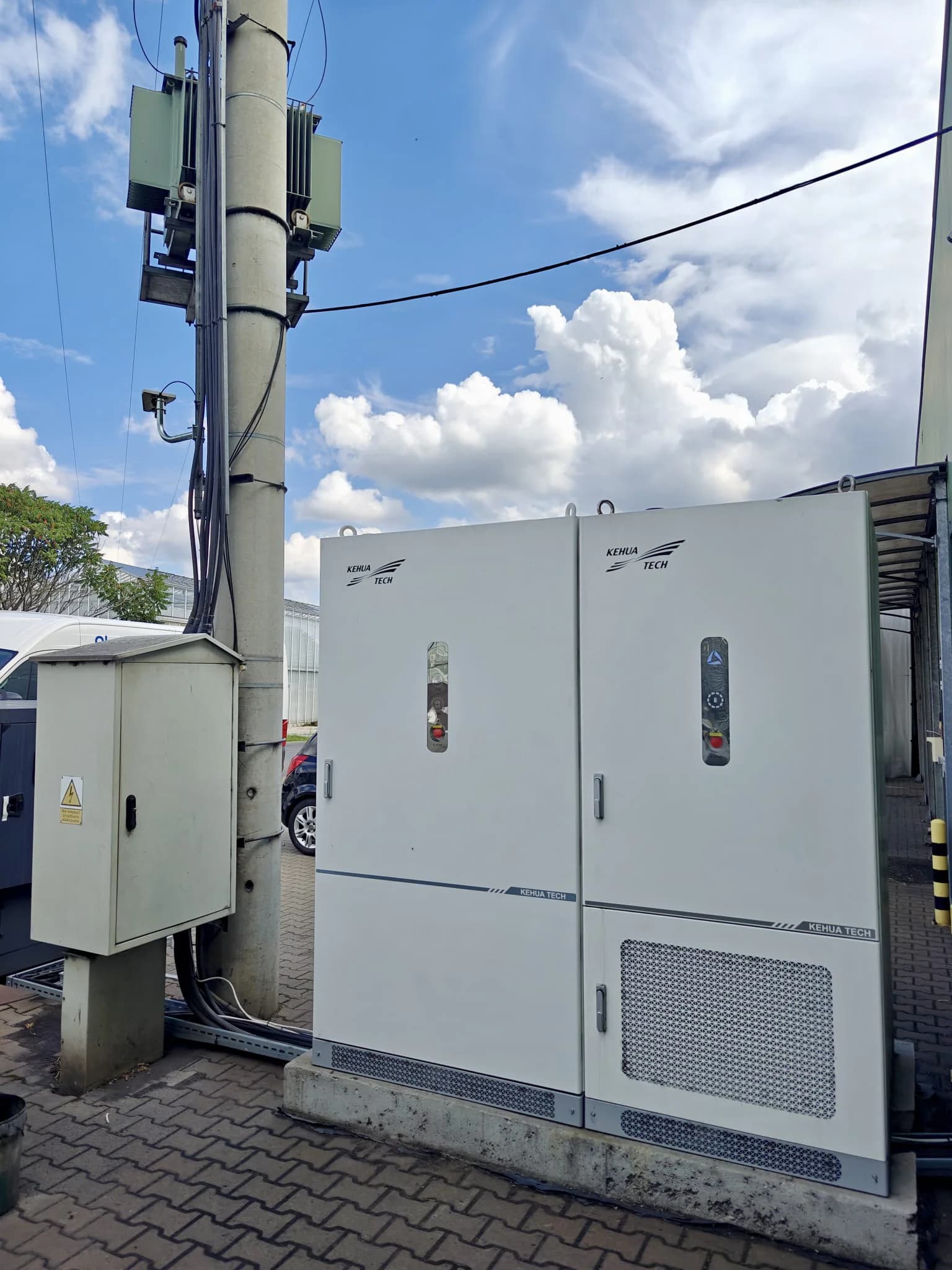
In this reality, the importance of solutions such as energy storage for companies and the EMS (Energy Management System) is growing. Energy storage allows for shifting energy consumption over time and reducing the purchase of energy at the most expensive moments. EMS systems, in turn, enable conscious consumption management, integration of energy sources, and response to changing prices.
Thanks to this, a company gains something that regulations cannot provide: real influence over energy costs and their predictability.
Therefore, investments in energy storage and energy management systems are increasingly becoming part of a company's energy security strategy.
It's not about the EU's reaction. It's about the resilience of Polish businesses
The European Union will react to crisis situations – as it has done in the past and is doing today. Protective mechanisms and regulations are a natural element of the energy market. From a business perspective, however, they have one common feature: they are late relative to the market.
Energy prices react instantly to geopolitical events, while regulations appear later and do not eliminate risk. Therefore, today it is not about whether the EU will react, but whether Polish companies are ready for energy price volatility. In practice, this means a shift from a passive approach to active management of energy and its costs.
Summary: energy price volatility as a new challenge for businesses
Europe is in a better situation today than in 2022, but the challenges have not disappeared – their nature has changed. The biggest problem for businesses is no longer energy availability, but its volatility and price unpredictability, dependent on the geopolitical situation.
The European Union's actions can reduce cost pressure at the economy-wide level, but they will not protect an individual company from sudden energy price changes. As a result, energy is becoming an area of business risk management.
Therefore, investments in solutions such as energy storage and EMS are increasingly driven not by a desire for optimization, but by the need to increase company resilience and stabilize energy costs.
Check how exposed your company is to energy price volatility
Do you want to check how exposed your company is to energy price volatility?
Sign up for a free energy analysis – we will show you:
– where you are actually overpaying,
– what your cost risk profile looks like,
– which actions make business sense today (energy storage, EMS, optimization).
Fill out the form and check your company's potential
About Technius
We help companies cut energy costs — from audits and analyses to deploying energy storage and EMS systems. Our team has delivered hundreds of projects, saving clients millions of zloty.
Meet us