Energy Storage Systems (ESS) are increasingly appearing in companies' investment plans. Rising energy prices, distribution fees, and pressure for cost stability mean that energy storage is sometimes seen as a natural step towards optimization. In practice, however, many such investments do not bring the expected results. The problem is not the energy storage technology itself. Pro
Energy Storage Systems (ESS) are increasingly appearing in companies' investment plans. Rising energy prices, distribution fees, and pressure for cost stability mean that energy storage is often seen as a natural step towards optimization. In practice, however, many such investments do not yield the expected results.
The problem is not the energy storage technology itself. The problem is how it is used.
An energy storage system is very often treated as a standalone solution that should "by definition" generate savings. Meanwhile, an ESS without a control layer is just hardware. It functions correctly electrically, but it does not understand the economic or operational context. Therefore, an ESS without an EMS (Energy Management System) works like a computer without Windows. The hardware is ready, the components are functional, but the mechanism that decides when and why to use available resources is missing.
What an Energy Storage System Actually Is – and Where Its Role Ends
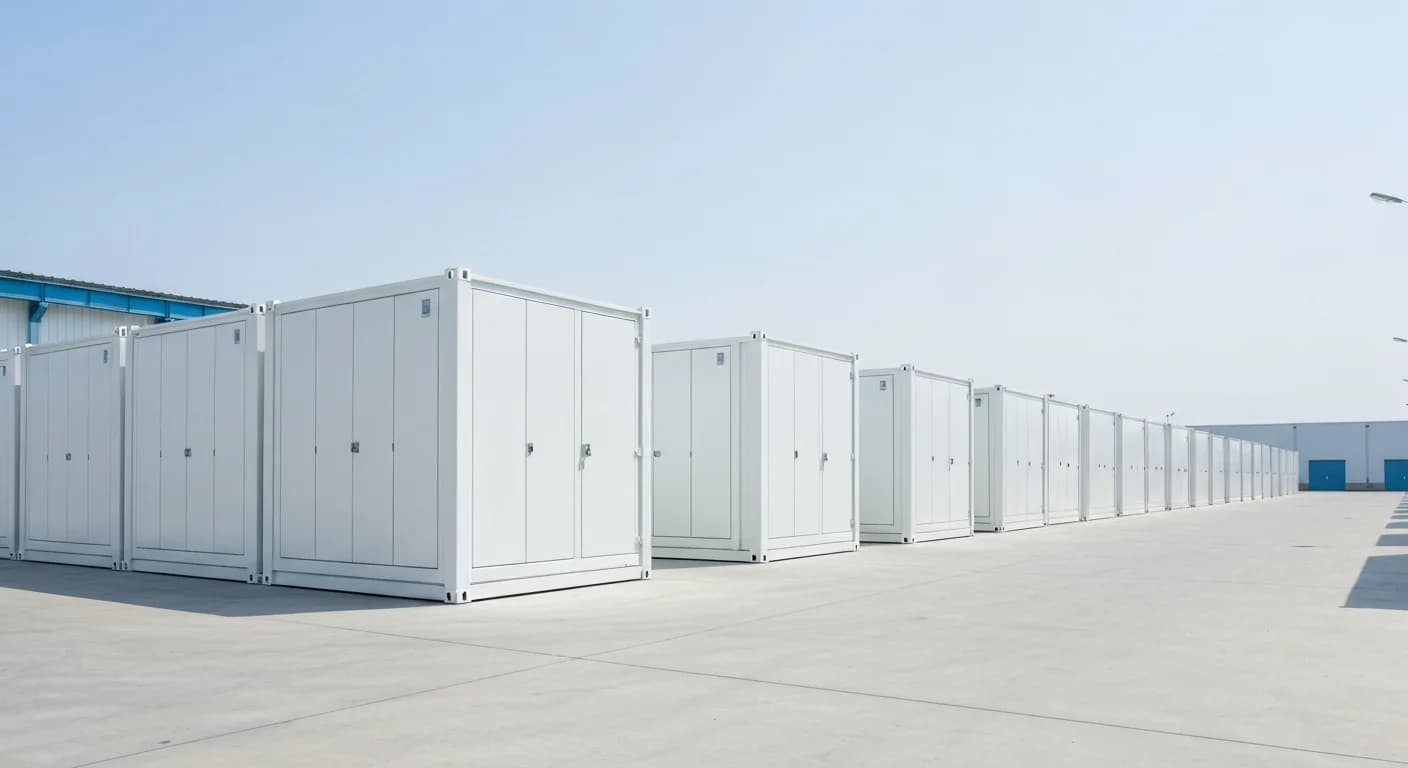
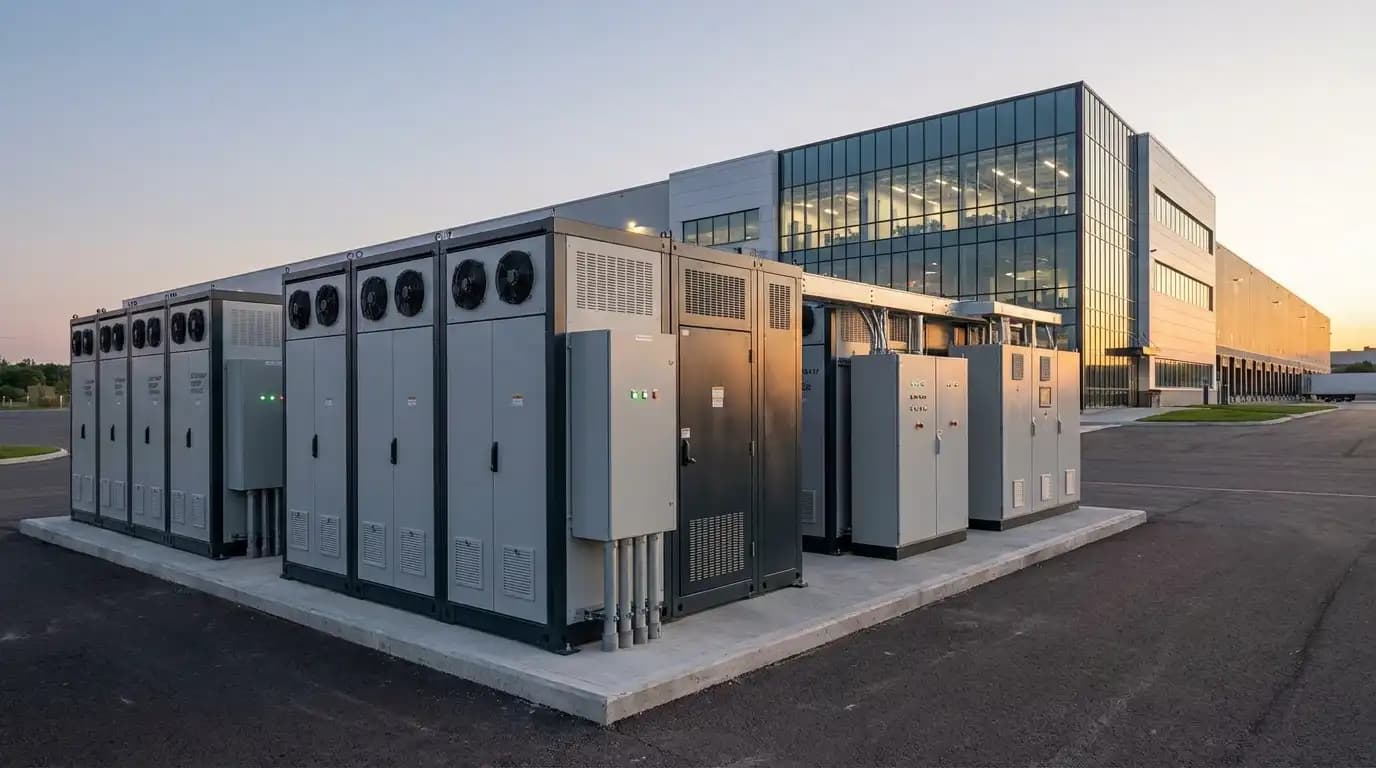
An industrial energy storage system is a set of physical components: batteries, inverters, protection devices, and a Battery Management System (BMS). Each of these elements has its technical parameters: capacity, maximum charging and discharging power, number of cycles, or degradation characteristics.
These are all hardware features. An energy storage system can deliver energy at its full available power at any time, but firstly, using the full power of the ESS rarely makes economic sense, and secondly, one needs to know at what hours charging and discharging the energy storage is profitable.
An ESS does not distinguish between expensive and cheap energy. It does not know the tariff structure or the costs of contracted power. It does not understand which loads in the plant are critical and which can wait temporarily. For the storage system, every kilowatt-hour looks the same – regardless of whether its use lowers the bill or raises it. Without an additional decision-making layer, the energy storage system does not optimize costs. It merely executes commands that someone must design beforehand.
EMS as the Decision-Making Layer of the Energy System
An EMS (Energy Management System) is not an add-on to an energy storage system or an extended visualization panel. Its role is to manage the energy infrastructure of an energy consumption point or a microgrid based on data, rules, and business priorities.
The EMS collects information about energy consumption, production, prices, storage status, and the operation of key loads. Based on this, it makes real-time decisions: where to draw energy from, at what power, for how long, and at the cost of some compromise.
Comparing an EMS to an operating system is not a marketing metaphor but a technical one. Just as an operating system manages a computer's resources, facilitates control, enables complex tasks, and resolves conflicts between processes, an EMS manages energy flows and sets priorities between different goals: cost, process stability, and component lifespan.
Without an EMS, an energy storage system operates statically. With an EMS, it becomes an element of a dynamic decision-making system.
Why ESS Without EMS Rarely Delivers Real Savings
One of the higher components of company bills are power-related charges – both contracted power and temporary exceedances. It is these short-term peaks that often generate the highest costs.
An energy storage system without an EMS cannot effectively respond to such situations because it does not understand their financial significance. It may discharge too early, too late, or at a time that has no real impact on the charges. As a result, the ESS "works," but not where the real cost is incurred.
The issue of tariffs and time zones is similar. Simple schedules like "charge in the cheap zone, discharge in the expensive one" quickly become outdated. Consumption profiles change from day to day, and energy prices are increasingly variable. Without an EMS, the system operates based on assumptions, not current conditions.
Self-consumption is also often overestimated. Charging the storage with energy from PV can be profitable, but not in every hour and not with every consumption profile. An EMS can assess whether self-consumption at a given moment actually reduces the cost of the entire system, or merely shifts energy without economic effect.
What EMS Does in Practice and Why It Matters
A modern EMS does not operate according to a single scenario. Its task is to continuously make decisions based on changing conditions. The system decides at what power to charge or discharge the storage, how deeply to intervene in its capacity, and when to pause a cycle to avoid accelerating battery degradation.
In the case of power peak reduction, the EMS reacts in real-time, not according to a rigid schedule. It monitors the load and activates the storage only when an exceedance has real economic significance. This is the difference between "eyeball" control and data-driven control.
EMS also affects the long-term profitability of the investment. Suboptimal control shortens battery life and worsens the ROI of the entire project. A well-designed EMS allows for controlled cycle management, rather than relying on random decisions.
EMS and Technological Process Stability
In many plants, energy is an integral part of the technological process. It powers production lines, cooling systems, and automation, on which operational continuity depends. Uncontrolled changes in power sources can destabilize the process instead of optimizing it.
In such cases, an ESS without an EMS can be a source of risk. The lack of priorities and context leads to decision-making conflicts that are difficult to predict and even harder to control. EMS links energy management with the plant's real needs and eliminates system randomness.
In this context, it is worth noting the risks associated with voltage and frequency fluctuations, which in an industrial environment directly impact process stability. Sudden load changes, machine startups, or grid instability can cause short-term deviations in power parameters, leading to automation errors, controller restarts, or accelerated equipment wear. An ESS operating under EMS control can act as an energy buffer that stabilizes the local plant grid, reacting to disturbances faster than external systems. However, control is key – without an EMS, the energy storage system does not recognize which fluctuations are technologically significant and which are merely transient phenomena. Only EMS allows the energy storage system to be used as a tool to limit the impact of voltage and frequency fluctuations on process continuity and safety.
Why a Ready-Made EMS Often Isn't Enough
Many systems offered with hardware are closed solutions, limited to one manufacturer and one scenario. This type of EMS rarely takes into account the full cost structure, distribution charges, or the specifics of the technological process.
An effective EMS is not a boxed product. It is created based on an analysis of the consumption profile, the nature of the business, and business goals. It is an element of an energy project, not an add-on to an energy storage system.
An additional limitation, often overlooked when choosing a "ready-made" EMS, are the legal and regulatory conditions for admitting control systems to operate in the European market. This particularly applies to some Asian EMS suppliers, including systems offered directly by energy storage manufacturers. Limitations in certification, compliance with local grid codes, cybersecurity regulations, or distribution system operator requirements mean that not every EMS can be freely implemented in an industrial environment in the EU. In practice, this means that even a technically sound control system may not meet formal or operational requirements, which further reinforces the need to design EMS based on local regulations, not solely on hardware capabilities.
ESS and EMS in an EPC Model
Integrating ESS and EMS into a single EPC project significantly increases the predictability of results. When the design, control, and execution are divided among different entities, the risk of errors and unclear responsibilities increases, including incorrect energy flow metering. It is crucial that the EMS should be designed before selecting the energy storage system, not after its purchase. First, the system's operating logic and profitable functionalities are defined, and only then is the capacity and power of the ESS selected. Reversing this order often leads to poorly chosen investment parameters.
What the Correct Decision-Making Process Before ESS Implementation Looks Like
This stage is worth detailing explicitly, as this is where mistakes are most often made:
- Analysis of energy and power consumption profiles over time.
- Identification of profitable functionalities (power peaks, tariffs, distribution charges, DSR).
- Design of EMS control logic and operating scenarios.
- Selection of the energy storage system based on the designed logic, not the other way around.
- System integration and real-world testing.
This is not a purchasing process. It is a design process.
The Most Common Investor Mistakes
The most common mistake is treating the energy storage system as a standalone solution that will "solve the energy cost problem." Investors focus on the system's power and capacity, rather than at what times and for what reason energy is expensive. Without understanding the consumption profile and cost structure, technical decisions become random, and the energy storage system begins to act as a passive resource rather than an optimization tool.
Another common problem is overlooking power costs and temporary exceedances, which in many plants account for a significant portion of the bill. In such cases, the ESS is sometimes used to "shift energy" but not to actually reduce distribution costs. Equally often, EMS is treated as an optional add-on that can be "added later," which in practice leads to technical limitations and loss of some of the system's potential.
Scenario testing and simulations of system operation under real plant conditions are also commonly neglected. Without verifying how the installation will behave during sudden load changes, machine startups, or grid failures, it is difficult to talk about predictable results. As a result, an investment that looked profitable on paper does not meet expectations, either financial or operational, in practice.
Summary
An energy storage system is hardware.
EMS is the result.
Without EMS, an energy storage system does not understand costs, does not know priorities, and does not operate predictably. Only the control layer makes the energy storage system an optimization tool, not just another piece of infrastructure. An energy storage system purchased without an EMS design is not optimization – it is risk. Every decision made without analyzing the profile, power costs, and real control capabilities shifts the burden of responsibility to the hardware, which does not make decisions. At Technius, we design EMS before ESS appears, because only then does the investment have a predictable effect. If you want to know whether the energy storage system in your facility will contribute to financial results or just to depreciation – start with our analysis, not an offer.
About Technius
We help companies cut energy costs — from audits and analyses to deploying energy storage and EMS systems. Our team has delivered hundreds of projects, saving clients millions of zloty.
Meet us