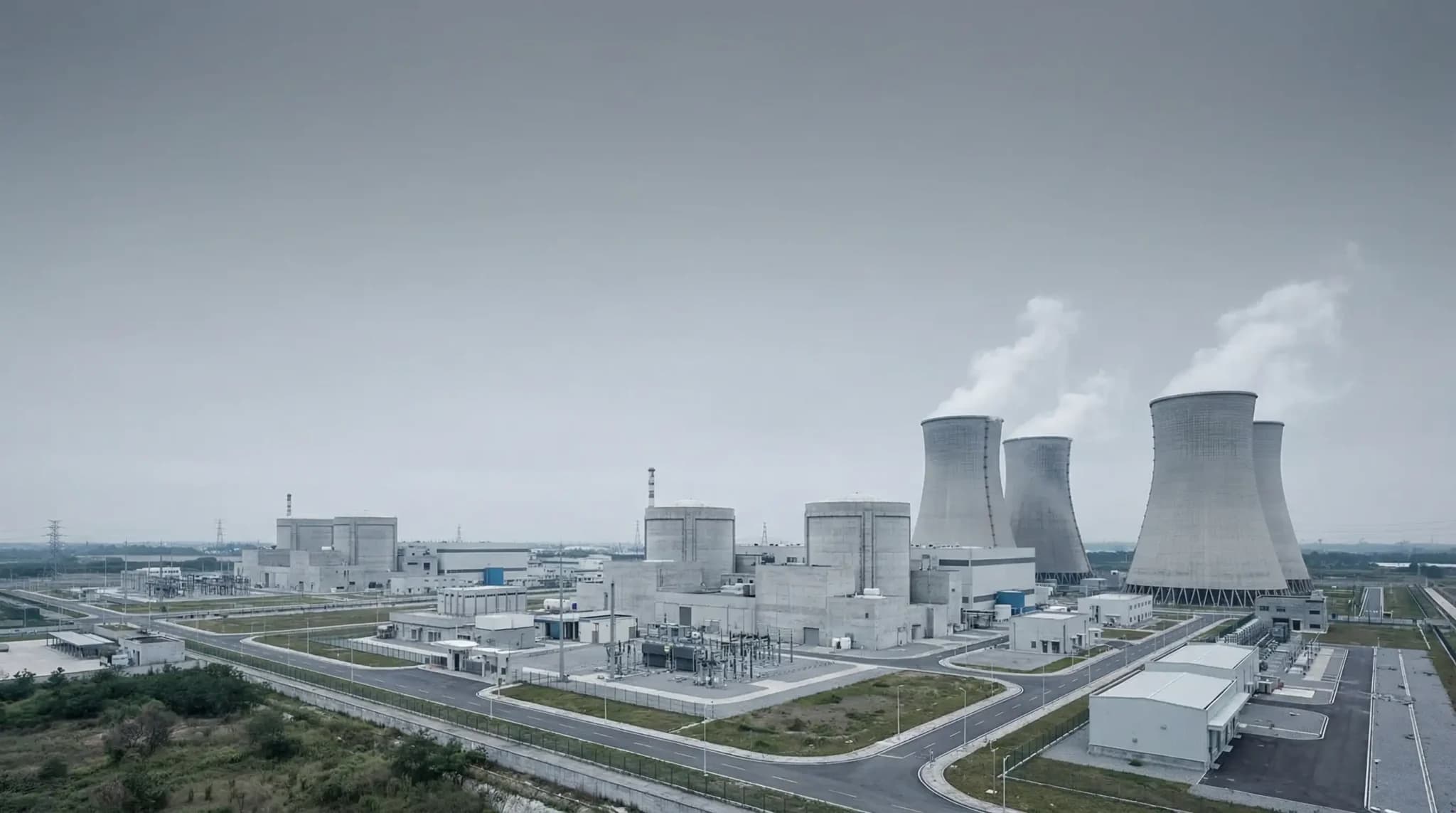
Public support for nuclear energy in Poland is growing, as confirmed by the latest public opinion surveys. Nuclear energy in Poland is increasingly moving out of the phase of disputes and emotions, and entering the area of rational, systemic discussion. The latest data show that support for nuclear power has reached a historically high level, and the concerns that have dominated public debate for years are clearly weakening.
Social support for nuclear energy in Poland is growing, as confirmed by the latest public opinion polls. Nuclear energy in Poland is increasingly moving away from the phase of disputes and emotions and entering the realm of rational, systemic discussion. The latest data show that support for nuclear power has reached a historically high level, and the concerns that have dominated public debate for years are clearly weakening.
The published data indicate that over 90% of Poles support the development of nuclear energy, and a vast majority even accept the location of a nuclear power plant relatively close to their place of residence. This is a significant qualitative change – not only at the declarative level but also in terms of social readiness for real investments.
From Controversy to Acceptance
Just a few years ago, nuclear energy was a difficult topic in Poland. Associated with risk, high costs, and historical disasters, it naturally evoked distance. Today's research results, however, show that the public perception of nuclear power has undergone a clear evolution.
This change did not happen suddenly. In the background, we have the growing instability of the energy market, experiences of price crises, problems with power availability, and increasing awareness of the limitations of a system based solely on variable sources. Nuclear power has ceased to be an abstract technology of the future and has begun to be perceived as one of the elements organizing the energy system.
A significant signal is also the high level of local acceptance. This shows that support does not end with general declarations but also extends to the real consequences of investments.
What does this mean for business customers?
For companies and energy-intensive facilities, growing public support for nuclear power is not an abstract curiosity. It is a signal that Poland's energy mix will gradually move towards greater stability, not just temporary solutions.
In practice, this means greater predictability of network operating conditions, a lower risk of abrupt regulatory interventions, and a better environment for local energy strategies: own generation, energy storage, and active consumption management.
The less systemic chaos, the greater the importance of decisions based on data, analyses, and the real needs of the facility.
Our Opinion
From Technius's perspective, this trend is primarily systemic, not ideological.
The growing social mandate for nuclear energy means greater predictability of strategic decisions in the energy sector. And predictability is today one of the most important factors influencing the sense of investment. Both on the part of the state and business customers.
Nuclear power is not a solution to all system problems. It will not replace renewable energy sources, nor will it eliminate the need for storage or consumption management. Its role is different: stabilizing. It provides a predictable basis for system operation, reduces the risk of power deficits, and limits pressure on infrastructure during critical moments.
From a market perspective, this is good news. A stable energy foundation facilitates the development of RES, increases the sense of investment in energy storage and EMS systems, and allows for planning consumption and costs over a longer horizon, rather than just reacting to crises.
Summary
Social support for nuclear energy in Poland has reached a level that just a few years ago seemed hard to imagine. Nuclear power has ceased to be a controversial topic and has become an accepted element of the future energy mix.
For the energy market, this is a signal of stabilization. And stabilization is a necessary condition for making rational, long-term investment decisions – both at the system level and for individual plants or facilities.
About Technius
We help companies cut energy costs — from audits and analyses to deploying energy storage and EMS systems. Our team has delivered hundreds of projects, saving clients millions of zloty.
Meet us