At the energy summit in Hamburg, Denmark and Germany signed a binding agreement on the implementation of the Bornholm Energy Island project – Europe's first hybrid energy island in the Baltic Sea. The project involves the construction of a joint offshore hub that will connect offshore wind farms with the power grids of both countries. The agreement regulates the division of costs, responsibilities, and responsibilities.
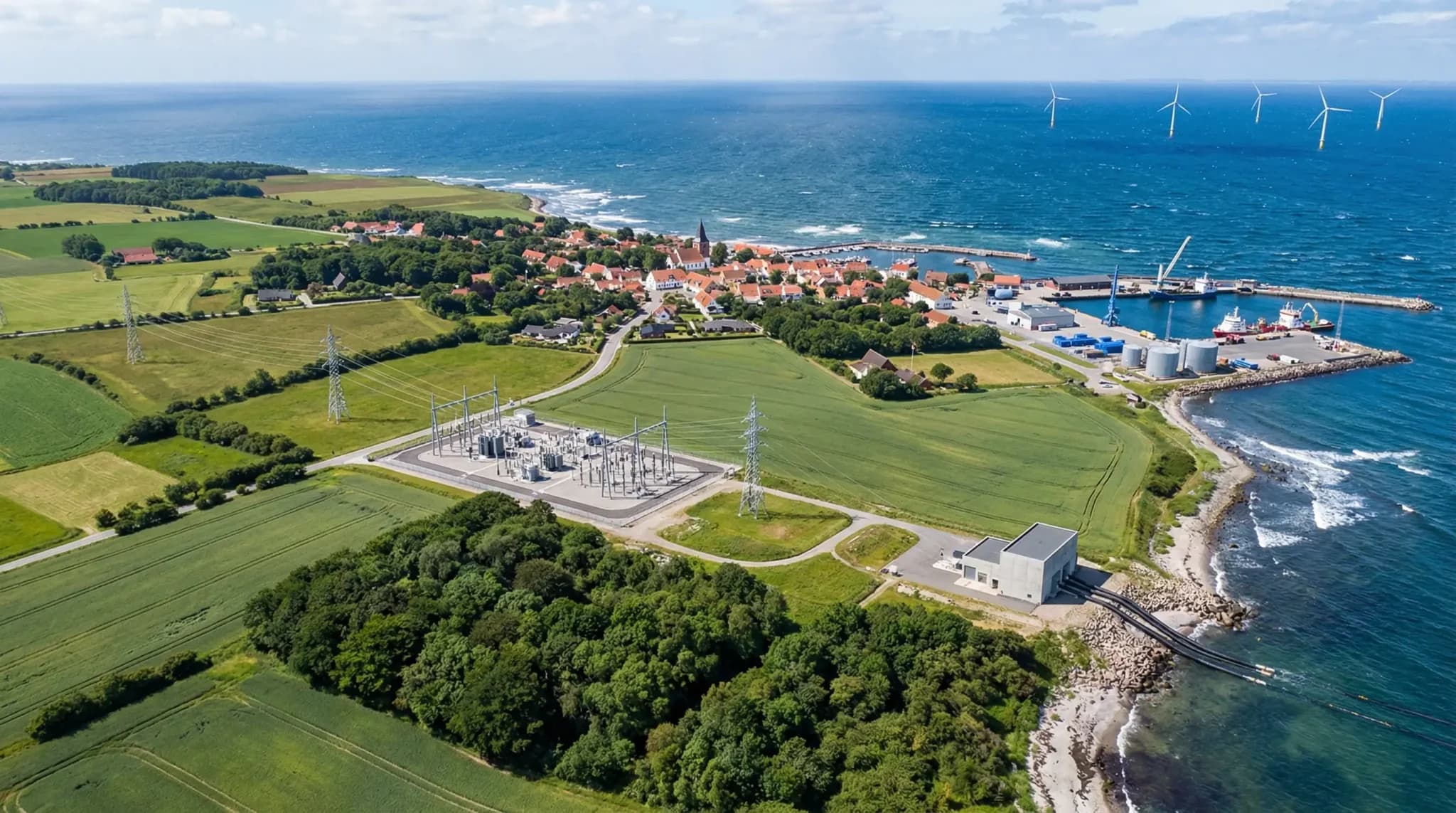
At the energy summit in Hamburg, Denmark and Germany signed a binding agreement for the implementation of the Bornholm Energy Island project – Europe's first hybrid energy island in the Baltic Sea. The project involves the construction of a joint offshore hub that will connect offshore wind farms with the power grids of both countries.
The agreement regulates the division of costs, investment responsibilities, and the legal framework for transmission infrastructure. This is a key step that moves the project from the level of political declarations to the phase of actual implementation.
3 GW of capacity and cross-border HVDC infrastructure
Bornholm Energy Island will enable the connection of offshore wind farms with a total capacity of up to 3 GW. The energy will be transmitted to two countries using HVDC cables:
– approximately 2 GW will go to Germany,
– approximately 1.2 GW to Denmark.
The project is based on the concept of a joint energy hub in the Baltic Sea, which integrates offshore energy production with national grids, increasing system flexibility and security of supply. The investment has received significant financial support from the European Union under the Connecting Europe Facility program.
Our opinion
Bornholm Energy Island is not just an offshore project. It is a model for building future energy infrastructure in Europe, where system integration, not just energy production, is of key importance.
From a systemic perspective, this project:
– shows that the development of RES requires parallel expansion of transmission networks,
– confirms the growing role of HVDC technology in stabilizing large volumes of power,
– serves as a benchmark for further cross-border energy projects in the Baltic Sea region.
For European energy, this is a clear signal of a shift from local investments to a common, resilient energy system capable of handling large-scale renewable sources.
About Technius
We help companies cut energy costs — from audits and analyses to deploying energy storage and EMS systems. Our team has delivered hundreds of projects, saving clients millions of zloty.
Meet us