Energy storage systems in businesses are becoming one of the most effective tools in 2025 for reducing energy costs and protecting businesses from changes in the energy market. We are publishing an interview with Armand Naporowski for the Gramwzielone.pl portal about why in 2025 many businesses will pay less for energy than in 2021 – despite nominal price increases. The material shows how
Energy storage systems in businesses are becoming one of the most effective tools in 2025 for reducing energy costs and protecting businesses from changes in the energy market.
We are publishing an interview with Armand Naporowski for Gramwzielone.pl about why many businesses will pay less for energy in 2025 than in 2021 – despite nominal price increases. The material shows how energy storage systems (ESS) and energy management systems (EMS) genuinely reduce costs, shorten investment payback periods, and optimize energy consumption in business.
Most Common Problems Businesses Face in Dealing with Energy Companies
Gramwzielone.pl: Based on your many years of experience, what are the most common problems and challenges entrepreneurs face when cooperating with energy companies?
Armand Naporowski, Member of the Management Board of Technius EMS sp. z o.o.: The number one problem for entrepreneurs in Poland is definitely the lack of knowledge about the procedures used by energy companies and other constantly changing legal conditions related to energy cost optimization, including investments in modern energy technologies. Business owners, board members, and directors who contact our companies often feel like they are caught between a rock and a hard place.
On the one hand, they hear about opportunities to reduce energy costs, about new technologies that improve energy efficiency, and on the other hand, they lack a reliable source of knowledge that would allow them to consciously assess how beneficial a given solution is for their business, for example, how much of what a salesperson tells them about an offered device or service has a chance of being implemented in their company. The lack of reliable information causes such strong fear in some entrepreneurs (mostly unconscious) that they choose to pay significantly more for energy than, for example, their competitors, just to avoid the risk of a misguided or too complicated investment for them.
How the Energy Market Has Changed in Recent Years and What It Means for Companies
From your perspective, how has the energy market changed over the past few years?
First and foremost, over the last 3 years, most businesses in Poland have painfully felt the drastic increase in active energy costs and distribution fees on their budgets. I say most, because as the saying goes, "when the winds of change blow, some build walls, others build windmills." A large portion of entrepreneurs focused on choosing the lowest of the high "fixed" energy prices based on long-term contracts with energy sellers and installing micro-photovoltaic systems (up to 150kW), while some decision-makers took advantage of the opportunities arising from the ongoing changes in the energy market. In recent years, many new instruments, simplified regulations, and cost-reducing technologies have emerged, including dynamic tariffs, DSR, PPA contracts, energy storage, energy management systems, and price arbitrage.
Therefore, it can be said that the energy market in the European Union is undergoing a true evolution. For business customers, in most cases, the term "energy recipient" no longer fits, and even the term "prosumer" no longer fits, because a company that keeps up with changes and takes advantage of the opportunities from the ongoing energy transformation can be called an integral part of the power grid. Energy recipients in 2025 can not only buy and use active energy intelligently but can also earn money, for example, by supporting energy grids in balancing energy supply and demand.
It is worth emphasizing that entrepreneurs are increasingly investing in low-emission technologies and improving energy efficiency out of a desire to reduce their negative impact on the natural environment. It can be said that in the energy sector, it is easy to combine "the pleasant with the useful," as in most cases, ecologically beneficial solutions also bring tangible economic benefits to the investor.
Energy Cost Stratification in 2025 – Why Some Pay PLN 2000 and Others PLN 500 per MWh
How much do business energy recipients currently pay for electricity?
In the previous question, I forgot to add another very important change in the energy market in recent years, which is also important in the context of this question. Namely, energy recipients in Poland are proportionally paying more for energy "distribution" and less for active energy. In my opinion, to assess how much business recipients currently pay, we should consider all components of electricity bills, which, as Rafał Brzoska emphasized this year, are illegible for most entrepreneurs. However, from an energy expert's perspective, I believe it is good that business customers receive energy invoices with a detailed breakdown of what determines the amount due. Thanks to this data and knowledge of the energy market, we can consciously optimize company costs.
Returning to the core of the question, the year 2025 is exceptional from my observations, because since I have been dealing with energy costs in business, i.e., since 2011, I have never seen such a wide stratification of energy costs for companies. I have seen invoices from medium-sized companies that are paying over PLN 2000 per 1 MWh this year, and also those that have paid even below PLN 500 per 1 MWh this year. If, for example, we assume that both companies consume 300 MWh annually, the first company will pay over PLN 450,000.00 more for energy annually!
Such differences are not accidental – energy storage systems in businesses increasingly allow for active control over the cost of energy purchase and distribution.
“More and more companies, for example, thanks to their photovoltaic installation and energy storage with an energy management system, are earning tens to hundreds of thousands of zlotys annually from reselling energy to the grid and participating in DSR.”
Energy Storage Systems in Businesses – Role and Functions in 2025
What functions do energy storage systems serve for business energy recipients?
The application of energy storage systems in businesses is becoming an optimization standard in 2025, rather than an 'innovative' project.
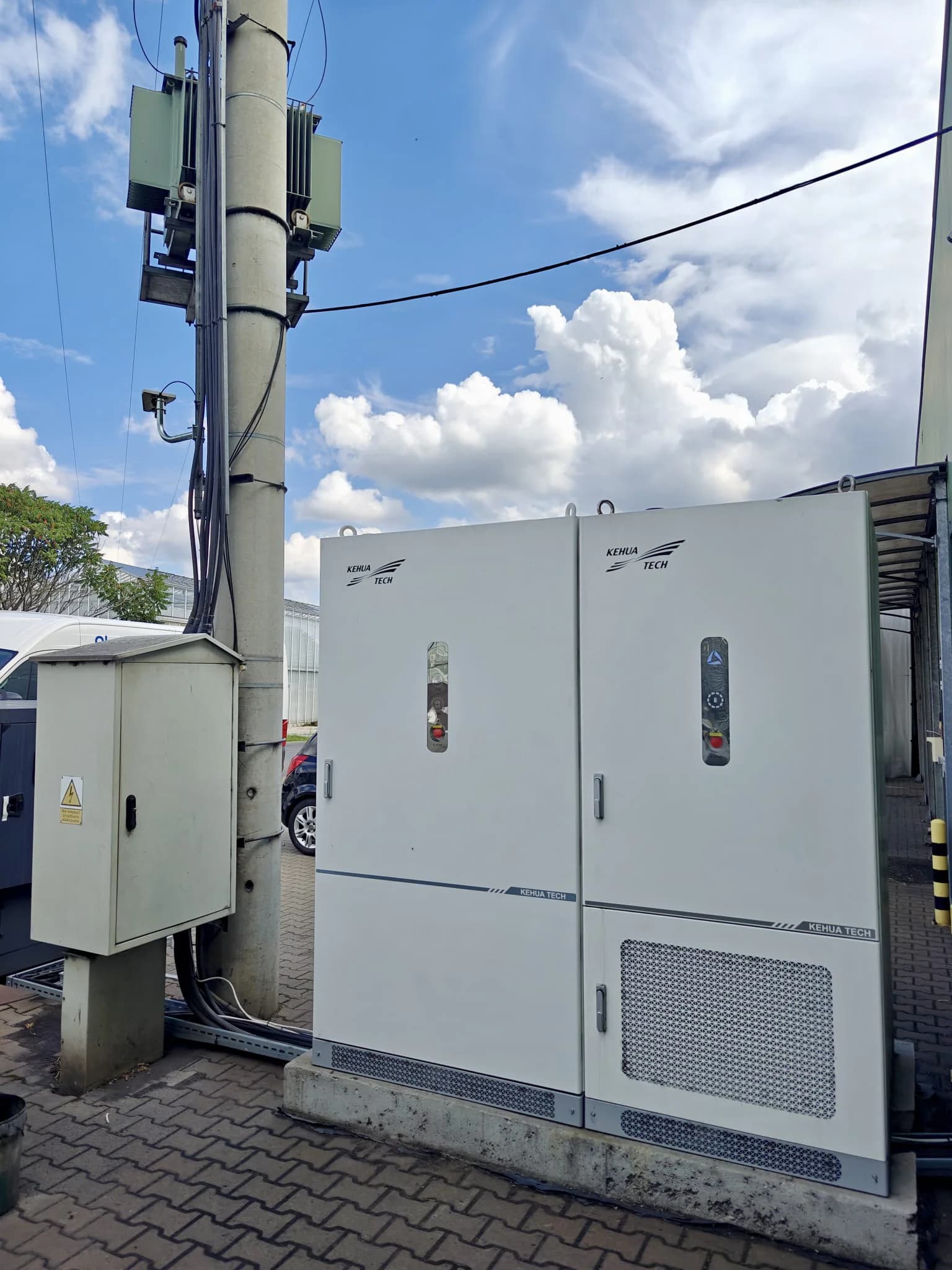
The functionality of an energy storage system, or more precisely, an energy storage system with an energy management system (EMS), depends more on the EMS than on the devices themselves. The energy storage unit is the DC part managed by the BMS, and its most important component is the batteries. The energy storage system itself consists of battery cells, a bidirectional inverter (PCS), a fire and explosion protection system, switchgear, etc. By integrating Technius EMS with energy storage systems produced by Kehua Tech, business energy recipients can benefit from as many as eleven functions.
These include, among others: monitoring key energy parameters in the company, blocking the outflow of electricity to the grid, increasing self-consumption from own energy sources, reducing the contracted power level (so-called peak shaving), optimizing the cost of purchasing active energy (e.g., by switching to hourly purchases based on Towarowa Giełda Energii quotes), reducing penalties for reactive power, optimizing energy distribution costs, ensuring emergency power supply from ESS, and automating DSR and System Services, thanks to which ESS owners can earn for making their availability ready for the power grid.
In practice, energy storage systems in businesses not only stabilize plant operation but also reduce penalties and improve self-consumption.
What Determines the Payback Period for ESS with EMS Investments in Companies
How long does the investment in an energy storage system for businesses take to pay back?
It is energy storage systems in businesses that are today one of the main factors enabling real control over the final energy cost in business.
Firstly, the prices of energy storage systems and EMS (Energy Management System) on the market are very diverse, and secondly, not every company can take advantage of all the functionalities of such a set, which is why the payback period can range from 3 to 12 years (assuming that the cheapest systems on the market will actually work as the investor expects).
All Kehua brand energy management systems installed by our companies with the Technius EMS application assume a return on investment of over 20%, and it should be emphasized that our calculations did not include savings resulting from, for example, providing backup power within 100ms or less. Analyses of ESS utilization that we have conducted for our clients show that the simple payback period for high-quality ESS from a reputable manufacturer with a fair margin is most often between 4 and 5 years.
We recommend performing such an analysis each time before making a decision to invest in an energy storage system. Based on the characteristics of a given company, including energy consumption profiles and active power demand, it is necessary to assess what functions the ESS can perform, calculate the potential savings and/or profits from the investment, and indicate the recommended system parameters. Only then will we be able to answer the question of what the payback period will be in a given company.
“I definitely recommend conducting a professional analysis of costs and revenues from investing in an energy storage system with EMS each time, as the issue of payback time and rate is quite highly individualized in this case.”
For Which Companies is ESS Most Profitable, and Where Will the Payback Be Longest
For what type of businesses (industries, consumption scale) is an investment in an energy storage system most profitable?
So far, investment in energy storage systems without subsidies is mainly profitable for energy offtake points with a contracted capacity above 40 kW. Analyzing only this group of recipients makes it easier to answer the question of which companies will achieve the longest payback periods (over 6 years), as there are relatively few such companies. These will primarily be companies that utilize their connection capacity 90-100% of the time, as in such cases, the energy storage system will have no time to charge, and increasing the connection capacity may be impossible due to the lack of available capacity in the power grid.
The second, even rarer case, is perfectly energy-managed companies. Thanks to the adaptation of technological processes to the needs of the energy sector, such companies already use the most favorable solutions on the market, including purchasing energy based on hourly quotes, DSR, power guards, reactive power compensation, electric power fee reliefs, etc., and consequently, their energy costs are very low, so the economic benefits from investing in ESS will be smaller.
However, it is worth emphasizing that such companies are also analyzing the use of energy storage systems, because in addition to economics, convenience and safety also matter, which are influenced by, among other things, independence from the need to adapt the company's operation to hours with cheaper energy or process automation. On the other hand, companies that, according to our ESS utilization analyses, will achieve the fastest payback periods (below 4 years) include, for example, companies where the implementation of intelligent energy management tailored to energy needs is not possible due to the inability to flexibly adjust technological processes, including power consumption control, without an energy storage system; energy offtake points with a connection capacity of 100 kW or higher; companies with their own energy sources whose power is limited by the grid's inability to accept energy.
Before deciding to invest, we recommend an analysis to determine if energy storage systems in businesses will actually provide a return in a given operating profile.
Conference on Energy Storage Systems in Businesses, Cost Optimization, and ESS-EMS Integration
Armand Naporowski will discuss the issues raised in this interview during a lecture that will take place on November 28 at Hotel Uroczysko in Cedzyna as part of a Conference dedicated, among other things, to the practical aspects of using energy storage systems in business, including a discussion of implemented investments in All-in-One energy storage systems for business energy recipients.
Representatives of businesses and auditing, sales, and installation companies who are interested are encouraged to register for this event via the form available at the following link: https://technius.pl/konferencja-innowacje-energia-w-biznesie-2025/
About Technius
We help companies cut energy costs — from audits and analyses to deploying energy storage and EMS systems. Our team has delivered hundreds of projects, saving clients millions of zloty.
Meet us