What exactly is changing in the regulations and what obligations are coming into force? From January 7, 2026, new regulations governing the installation of electrical energy storage systems will be in effect in Poland. The changes result from the amendment to the Building Law and, for the first time, directly organize the formal rules for energy storage investments – both in buildings and in freestanding installations.
What exactly is changing in the regulations and what obligations are coming into force?
As of January 7, 2026, new regulations governing the installation of electricity storage systems will be in effect in Poland. The changes stem from amendments to the Building Law and, for the first time, directly regulate the formal requirements for energy storage investments – both in buildings and in freestanding installations.
This is not just a cosmetic change. It is a real transformation that significantly limits the scope for discretionary interpretations and clarifies existing discrepancies in administrative practice.
Why were these changes necessary in the first place?
Until the end of 2025, energy storage systems operated in a legal grey area. The problem was not a lack of regulations, but a lack of a clear definition for energy storage in the Building Law.
In practice, this meant that:
– an identical installation in one district required no formalities,
– in another, it was treated as a building structure,
– investors had no certainty at what stage a project could be challenged.
The amendment was intended to cut through this problem with a single stroke: clear thresholds, clear obligations.
What is an energy storage system according to the new regulations?
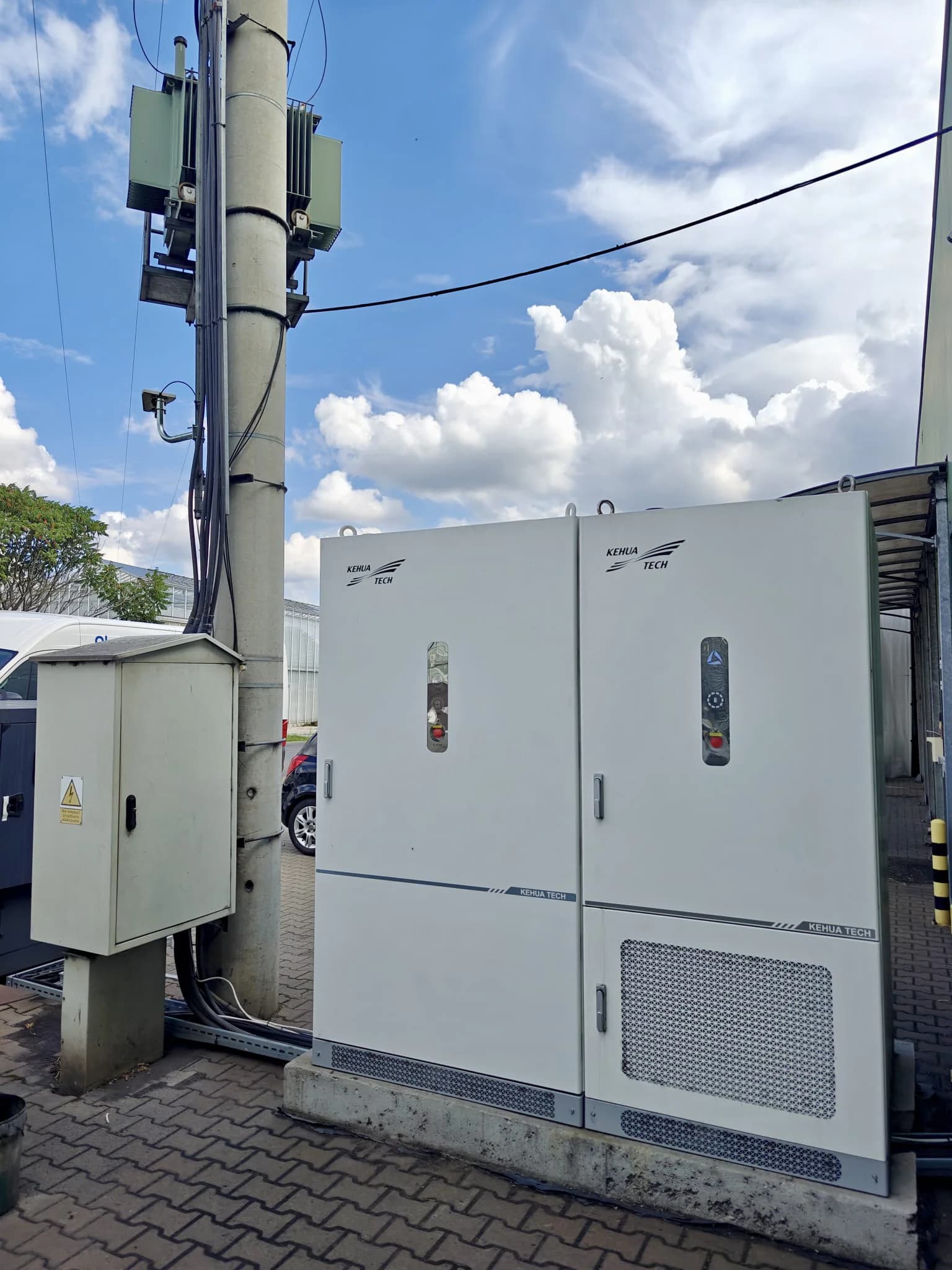
The new regulations, for the first time, directly define an electricity storage system as a technical installation used for storing energy, which can both supply energy to the power grid and power installations and devices within a given facility. This definition also includes systems operating independently of the grid, meaning the legislator treats on-grid and off-grid storage systems in the same way.
What is important here is what the law intentionally does not distinguish. From the perspective of the regulations, it makes no difference whether the energy storage system cooperates with a photovoltaic installation, serves solely as an emergency power supply, or its main purpose is energy cost optimization. All these applications are treated equally.
For the assessment of formal obligations, only two parameters are crucial: the capacity of the energy storage system and its installation method. These determine whether the investment requires no formalities, needs to be reported, or requires a building permit.
What is changing from January 7, 2026 – general logic of the regulations
The new regulations introduce a simple and clear logic, according to which the scope of investor obligations increases with the capacity of the energy storage system. The larger the installation, the greater its impact on the safety of the facility and its surroundings, and on the energy infrastructure, and consequently – the broader the scope of formalities required at the investment implementation stage.
Instead of discretionary interpretations, the legislator has introduced clear capacity thresholds that directly determine which procedures must be met.
Energy storage systems up to 30 kWh – no formalities
The smallest energy storage systems have been completely excluded from building procedures. For installations with a capacity of up to 30 kWh:
– no notification of works is required,
– no building permit is required,
– there are no administrative obligations.However, the absence of a requirement to notify construction works does not exempt from the need to meet technical, fire safety requirements, and regulations arising from other industry-specific regulations. Each installation should be analyzed in terms of the facility's conditions and its installation method.
This applies to both storage systems installed in buildings and freestanding ones. This is an official simplification, also confirmed in government communications.
Storage systems from 30-300 kWh – first formal threshold
Once the 30 kWh threshold is exceeded, the situation changes fundamentally. Such an energy storage system requires a notification of construction works, and this notification is not a mere formality.
In practice, this means the need to prepare:
– design documentation by a qualified person,
– fire safety approvals,
– a description of the installation's foundation and safety measures.
If the storage system is located within a building, the design must consider the installation's impact on the structure.
If it is freestanding – a site development plan and definition of safety zones will be needed.
Storage systems from 300-2000 kWh – installations under formal supervision
In this capacity range, the regulations go a step further. In addition to notification and full technical documentation, there are obligations towards the State Fire Service.
For the investor, this means, among other things:
– formal notification of the PSP,
– submission of the storage system's technical documentation,
– description of safety and emergency procedures.
In specific cases, fire safety approval obligations may also arise for smaller capacity installations – depending on the characteristics of the facility, its fire class, and the method of storage system installation.
At this stage, the legislator clearly signals that the energy storage system is a critical element of the facility's energy infrastructure.
Energy storage systems above 2000 kWh – what does this really mean for the investor?
An energy storage system above 2000 kWh requires a building permit. In practice, this means that it cannot be implemented "by notification" or without full documentation.
For such a storage system to be built, the investor must:
– commission a building design prepared by authorized designers (structural, installations, electrical),
– obtain fire safety approval from a fire safety expert,
– submit an application for a building permit to the relevant authority,
– after obtaining the decision, implement the investment in accordance with the approved design.
This is exactly the same formal path that applies to:
– transformer substations,
– large power distribution centers,
– other energy infrastructure facilities.
Such requirements apply to, among others, large industrial plants, PV farms with energy storage, and energy hubs.
Fire protection as one of the key elements of the changes
One of the most important elements of the amendment is the clarification of fire safety issues for energy storage systems. From the moment the capacity exceeds 30 kWh, every installation must be designed considering emergency scenarios and solutions to reduce the risk of fire and its consequences. As the storage capacity increases, so does the scope of required documentation, design responsibility, and the importance of clearly defined safety procedures.
In practice, this means moving away from the approach of simply "placing a container and connecting it to the installation" towards a full-fledged technical project.
What about ongoing investments?
The new regulations also cover some projects initiated before January 7, 2026, if administrative procedures have not yet been completed.
In practice, this means that:
– projects balancing on the edge of capacity thresholds should be re-verified,
– a lack of formal analysis may result in delays or the need to supplement documentation.
What do these changes mean for companies?
The new regulations do not block the energy storage market. They organize it. At the same time, they clearly show that an energy storage system:
– is no longer a technological add-on,
– is becoming a full-fledged element of the energy infrastructure,
– requires conscious planning from the concept stage.
For companies, this means one thing: the greatest risk today lies not in the technology, but in the incorrect formal classification of the investment.
Our commentary
The new regulations are not a barrier to energy storage systems, but a clear signal that storage is ceasing to be an add-on to PV installations and is becoming an element of a company's energy infrastructure. In practice, this means that key decisions must be made much earlier than at the stage of selecting a specific device.
Based on our experience, the biggest risk for investors today is not the technology itself, but incorrect formal classification of the storage system at the concept stage. Exceeding certain capacity thresholds without awareness of the administrative consequences can lead to delays, the need to redesign the installation, or the halting of the investment at the formal stage.
Therefore, for energy storage systems – especially in the B2B and industrial segments – a systemic approach is crucial: combining an analysis of the energy consumption profile, selection of the actually needed storage capacity, and assessment of formal and legal requirements even before starting the design. Only such an approach allows for planning an investment that will be technically sensible, formally safe, and economically justified.
Summary
As of January 7, 2026, energy storage systems operate within clearly defined legal frameworks. The capacity of the installation determines the scope of formalities, and technical and fire safety have become one of the main pillars of the regulations.
This is a change that significantly limits the scope for interpretative freedom and necessitates a more professional approach to the design of energy storage systems – especially in the B2B and industrial segments.
About Technius
We help companies cut energy costs — from audits and analyses to deploying energy storage and EMS systems. Our team has delivered hundreds of projects, saving clients millions of zloty.
Meet us