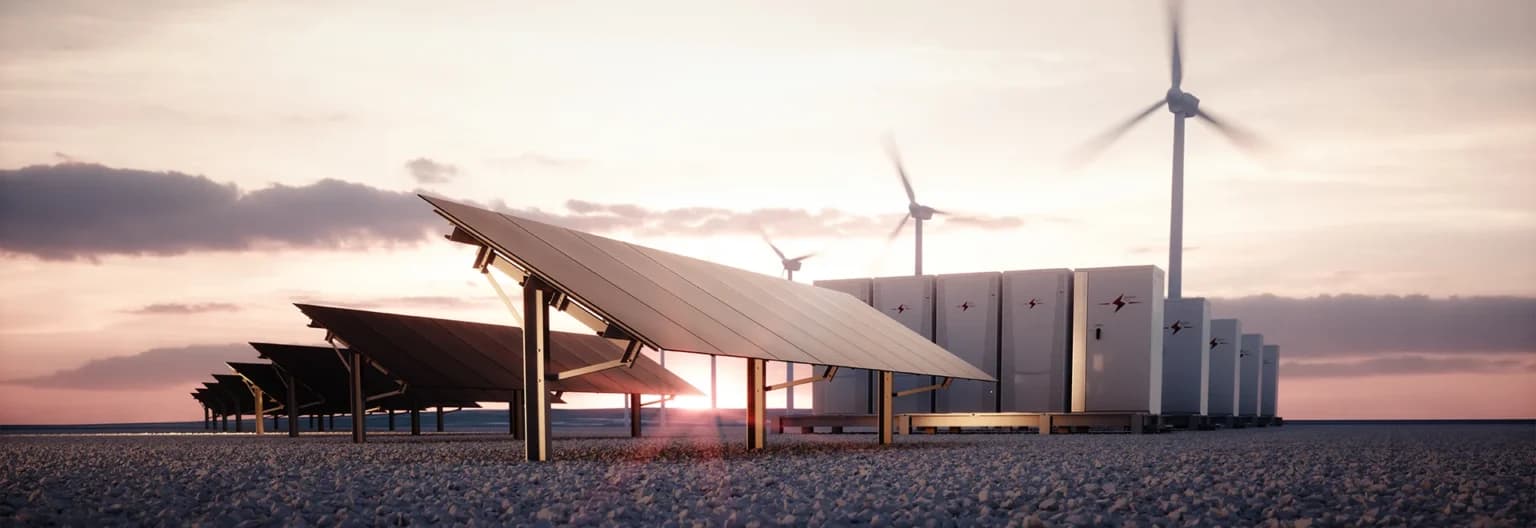
Connecting energy storage systems was until recently one of the main formal barriers for companies planning investments in BESS. Refusals, lengthy procedures, and lack of flexibility on the part of operators effectively extended the decision-making process. However, the latest changes in Energa-Operator's approach show that this area is starting to be genuinely simplified, which has specific implications for the B2B sector. What is it about
Connecting energy storage systems was until recently one of the main formal barriers for companies planning investments in BESS. Rejections, lengthy procedures, and a lack of flexibility on the part of operators effectively prolonged the decision-making process. However, the latest changes in Energa-Operator's approach show that this area is starting to become genuinely simpler, which has concrete implications for the B2B sector.
What exactly is this change about?
Until now, the scenario was classic: an investor submitted an application to connect an energy storage system, and if the requested power exceeded the grid's capabilities – they received a rejection. End of discussion, new application, more months.
After the changes:
– the operator does not automatically reject the application,
– instead, it informs about the maximum available connection power,
– the investor can immediately opt for the realistically available power, without starting the procedure from scratch.
Additionally, there is an option to specify the minimum connection power already at the application stage, which further shortens and simplifies the process.
In short: less paper-shuffling, more fact-based decisions.
Why is the operator doing this now?
Energa-Operator openly communicates that energy storage systems are crucial for grid stabilization in the context of a rapidly growing number of RES installations. Plans for the end of the decade include a multi-fold increase in the capacity of energy storage systems within the operator's area of operation.
This is important because it means one thing: energy storage systems are ceasing to be treated as an experiment and are becoming an element of the target architecture of the power system.
Our position: this is a good direction, but not "a green light for everyone"
From our perspective, this is a change the market has been waiting for, but it's worth keeping a cool head.
Simplification of procedures:
– lowers the entry barrier for ESS projects,
– shortens the time from idea to a real investment decision,
– reduces formal risk for the investor.
At the same time, this does not mean that every energy storage system "is profitable by definition." Available connection power is one thing, but the project economics, load profile, distribution tariffs, and the method of controlling the storage system – that's a completely different story.
We are increasingly seeing that:
– a storage system chosen solely "for the connection" does not solve a company's cost problems,
– the absence of an EMS means that the storage system's potential is only partially utilized,
– decisions made without analyzing the power profile often end in disappointment after commissioning.
Procedures are simpler. The responsibility for the project's sensibility still lies with the investor.
What does this mean for the B2B sector?
This news is clear: grid operators are starting to keep pace with the market. For industrial and commercial companies, this is a good time to:
– verify if connection limitations are actually blocking a project,
– check what storage capacity makes real technical and economic sense today,
– approach ESS not as a "trendy accessory," but as a tool for cost and risk control.
This is not a signal to "invest in any energy storage system now." It's a signal: if you have a real energy problem, formal barriers are now being lowered.
If you are considering an energy storage system for your company and want to check if simplified procedures actually open up a sensible investment scenario, start with the specifics.
Contact us and schedule a short technical consultation to see if ESS + EMS makes sense for your business scale.
About Technius
We help companies cut energy costs — from audits and analyses to deploying energy storage and EMS systems. Our team has delivered hundreds of projects, saving clients millions of zloty.
Meet us