Bifacial modules were created mainly to withstand the harshest weather conditions. Additionally, with only a slightly higher financial outlay, energy producers were able to achieve much higher energy efficiency. Another advantage of the aforementioned photovoltaic panels is their longer service life. The warranty for linear power degradation for bifacial panels is up to 30 l
Bifacial modules were primarily designed to withstand the harshest weather conditions. Additionally, with only a slightly higher financial outlay, energy producers were able to achieve much higher energy efficiency. Another advantage of these photovoltaic panels is their longer lifespan. The warranty for linear power degradation for bifacial modules is up to 30 years.
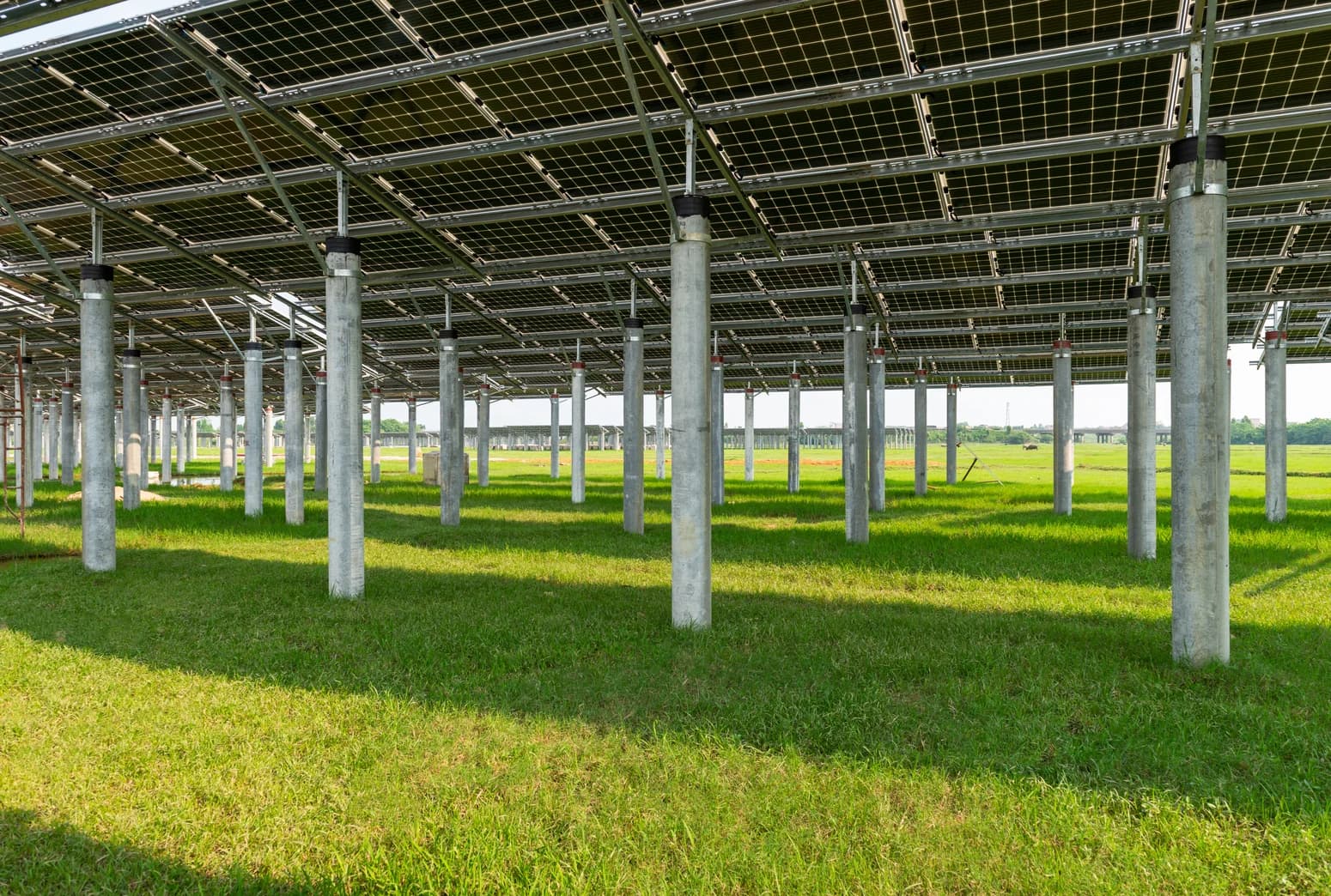
In traditional photovoltaic panels, the front layer is covered with glass, while the rear layer is protected by a special film. Bifacial panels, on the other hand, are distinguished by the fact that both the front and rear layers of the photovoltaic module are utilized, meaning the glass under which the silicon wafers are located is present on both the front and back of the module. Hence, bifacial modules are also known as glass-glass panels.
In its research, Solarworld demonstrated that bifacial modules with a power output of 330 Wp can produce the same amount of energy as traditional modules with a power output of 410 Wp, resulting in an overall increase in generated energy of approximately 25%.
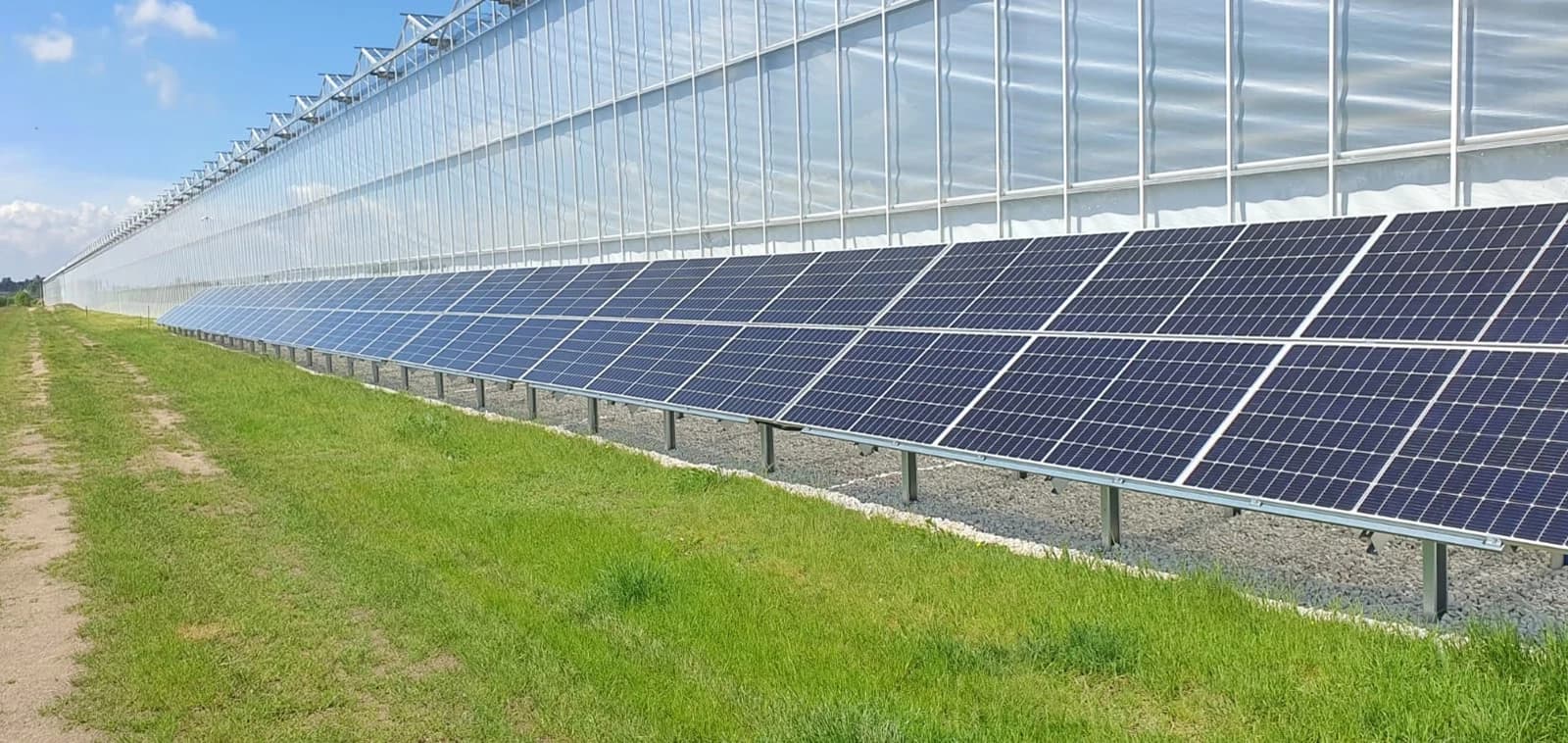
Unfortunately, bifacial panels also have their "disadvantages," if we can call them that. They can only be mounted on the ground or on a flat roof. There are three ways to mount bifacial panels:
On a single-axis tracking system – this is the most cost-effective, but also the most expensive way to mount bifacial panels.
On a fixed structure with panels facing south (at an angle of 25 to 35 degrees) – this mounting method can generate an additional 25% power yield.
Vertically east-west – this is the least efficient mounting method. Additionally, the spacing required between panels is at least 1.5 meters, which significantly limits the number of modules that can be installed in a given area.
Of course, besides the mounting method, there are several other factors that directly influence the efficiency of the modules:
- Shading and uneven illumination of the rear surface of the modules, e.g., by mounting structure elements,
- Distance between modules,
- Panel tilt angle
- Height of panel installation
- Degree of ground contamination
- Albedo – i.e., the ability of the ground surface to reflect diffuse radiation.
The best surfaces for reflecting sunlight are white surfaces. Below, we present the percentage albedo coefficients for white surfaces.
- White painted concrete – 60-80%
- Snow – 45-60%
- White roofing material 50-60%
- White sand 60%
However, it's not just white surfaces that can help us achieve higher energy yields with bifacial panels, as shown below:
- Grey roofing membrane – 62%
- Sand 30-40%
- Concrete 20-40%
In summary, all the information above indicates that bifacial photovoltaic module technology allows us to increase the power of a photovoltaic installation while maintaining the same surface area, making it very interesting. However, it should be remembered that the characteristics of these panels require appropriate mounting, which unfortunately excludes their use on pitched roofs. When considering installing such panels, it will be necessary to consult with a specialist who can help us decide whether these panels are indeed suitable for our installation and whether it will be cost-effective for us. Of course, to obtain such information, we invite you to contact us, as we are a company with specialists experienced and knowledgeable in the broad field of photovoltaics.
About Technius
We help companies cut energy costs — from audits and analyses to deploying energy storage and EMS systems. Our team has delivered hundreds of projects, saving clients millions of zloty.
Meet us