What are ETS and ETS2 and how do they affect energy prices in Poland? This is a question increasingly asked by businesses. The debate about ETS in Poland is heated because the system affects climate, energy prices, industrial competitiveness, and the cost of living simultaneously. For some, it is a necessary tool to limit emissions and accelerate the modernization of the economy. For others
What are ETS and ETS2 and how do they affect energy prices in Poland? This is a question increasingly asked by companies. The debate about ETS in Poland is heated because the system affects climate, energy prices, industrial competitiveness, and the cost of living simultaneously. For some, it is a necessary tool to reduce emissions and accelerate economic modernization. For others, it is a mechanism that raises energy prices and increases cost pressure on companies.
One thing is most important: ETS is not a regular tax. It is an EU emissions trading system where CO₂ emissions are given a real market price. This is precisely why ETS affects not only climate policy but also the economic calculations of businesses, investment profitability, and energy prices.
How does ETS work in practice?
EU ETS, or the EU Emissions Trading System, operates on the cap-and-trade principle. The EU sets a limit on total emissions for covered sectors, and then allowances corresponding to the right to emit are traded – generally 1 tonne of CO₂ (in practice: emissions calculated as so-called CO₂ equivalent). A company that emits more must buy more allowances. A company that reduces emissions needs fewer.
This is a key difference from a carbon tax. In a tax, the regulator sets the price. In ETS, the regulator sets the amount of emissions, and the price is formed on the market. Therefore, ETS is both a regulatory and a market system.
For companies, this is not theory. Entities covered by ETS operate under the MRV regime: they must monitor emissions, report them, and undergo verification. If a company meets the criteria for inclusion in the system, there is no "opt-out option." Failure to settle means sanctions, including a penalty regime of €100 for each tonne of CO₂ not settled on time.
Where did ETS come from and why is the EU developing it?
ETS has been developing since the early 2000s. Its origins are linked to the Kyoto Protocol of 1997, the Commission's 2000 Green Paper, the directive establishing the system in 2003, and its launch in 2005 as a pilot. The initial phases of the system had flaws – mainly an oversupply of allowances and too weak a price signal – which is why the EU gradually tightened it.
Why? From the EU's perspective, ETS has three objectives. Firstly, it is to reduce emissions. Secondly, it is to create a long-term investment signal for low-emission technologies. Thirdly, it is to generate revenue to support transformation. In the 2023 revision, the system was significantly tightened: the cap is intended to lead to a 62% reduction in emissions by 2030 compared to 2005, and the reduction rate increased to 4.3% per year in 2024-2027 and 4.4% from 2028 for the general cap.
In the Polish context, what is important is not that "Poland has its own historical ETS base," but that it entered the transformation from a more emission-intensive starting point than many Western European countries. The economy and the power sector were heavily based on coal for decades, which is why the cost and pace of adjustment are more keenly felt in Poland.
Why does ETS affect energy prices in Poland?
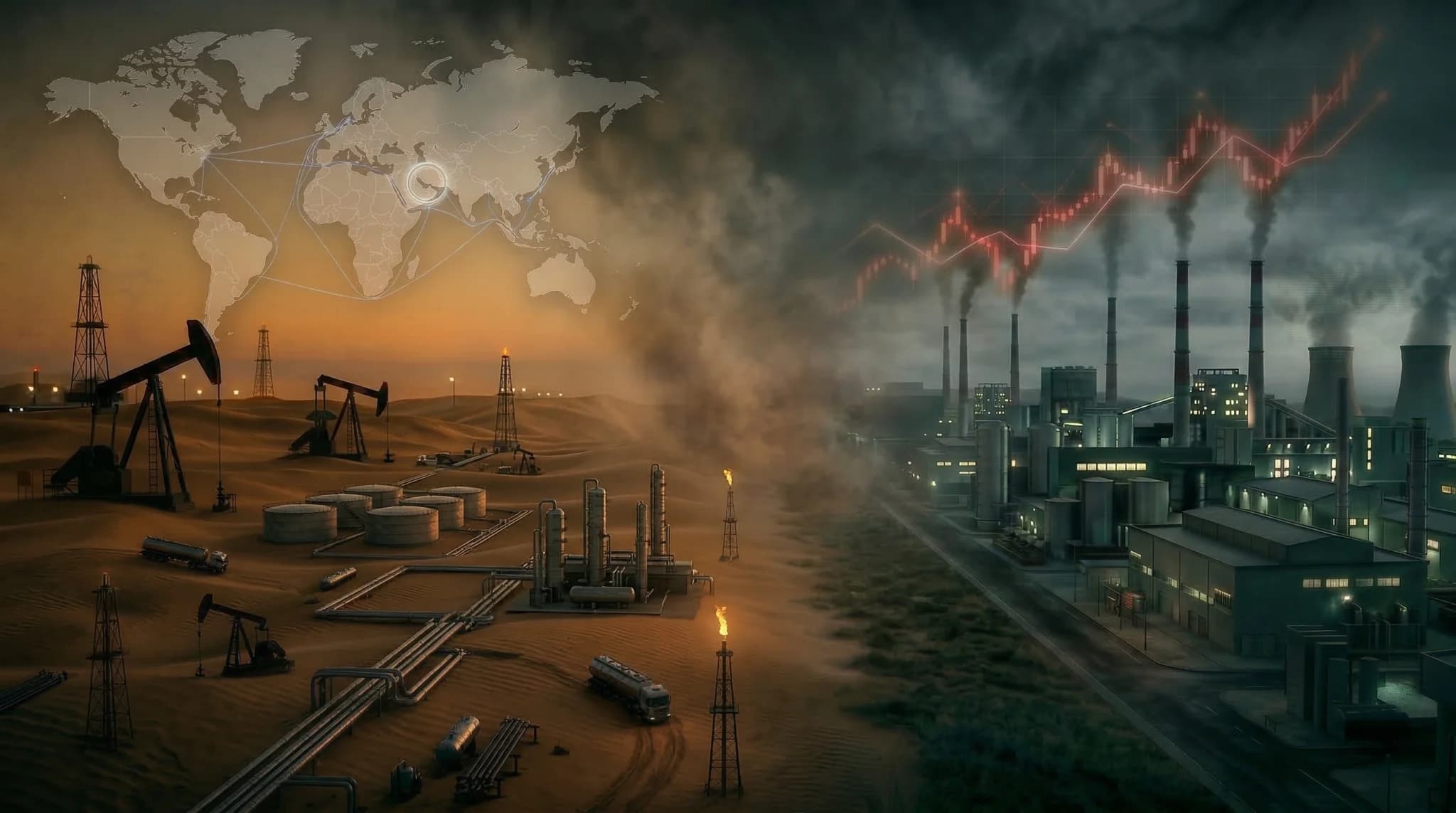
ETS affects energy prices because the cost of CO₂ becomes part of the cost of energy generation. The more emission-intensive a generation unit is, the more strongly the allowance price translates into production costs. In the energy market, the marginal cost determines the wholesale price, so an increase in the EUA price can raise energy prices for the entire market.
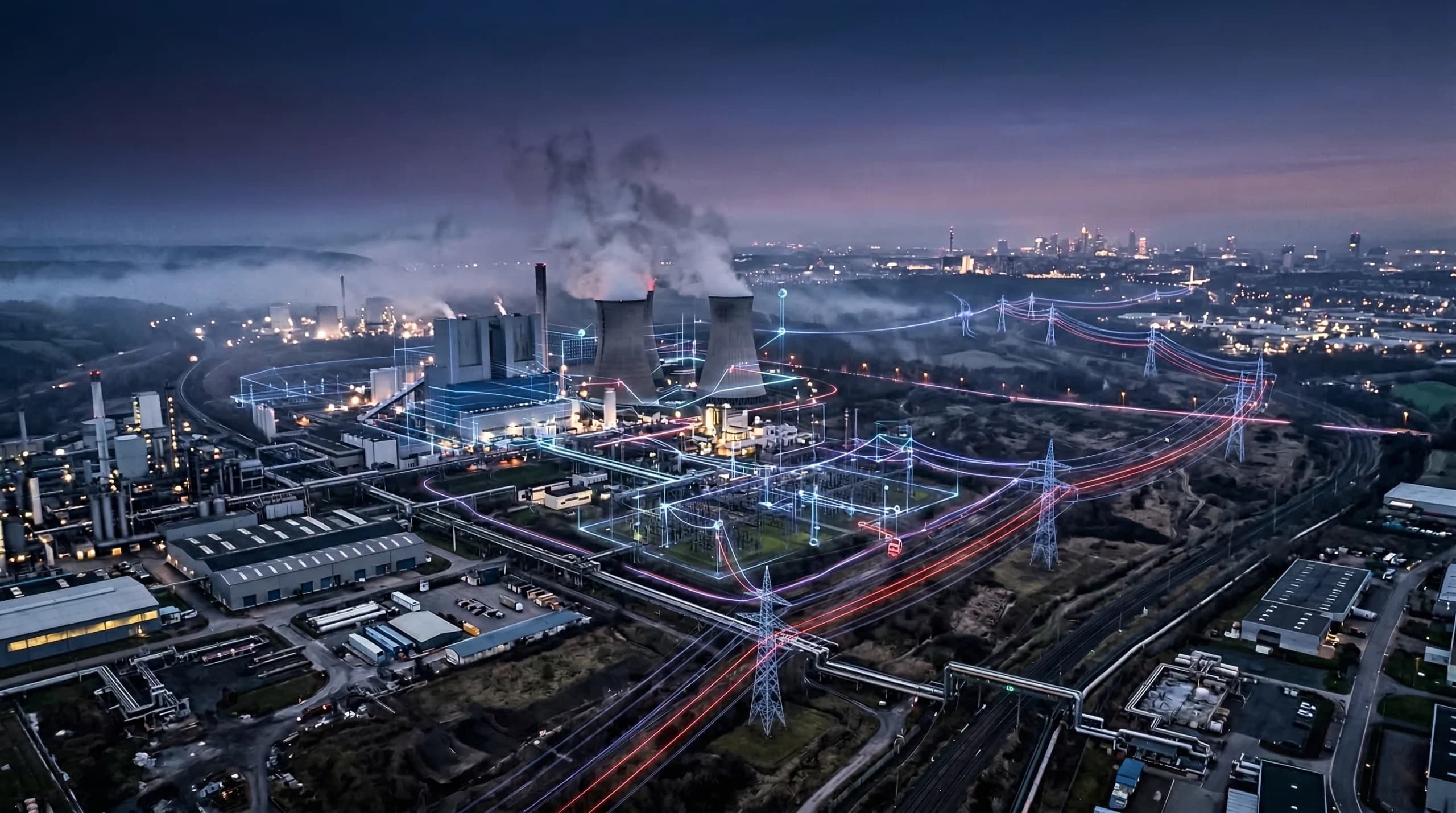
Poland feels this more acutely because its energy mix remains more emission-intensive than in some other EU countries. A report indicates that in 2024, coal-fired power plants still accounted for a significant share of electricity generation in Poland. The NBP indicated that for units with emissions above 1000 kg CO₂/MWh, the cost of allowances could account for over 60% of the wholesale electricity price during the analyzed period.
This means something very practical for companies: ETS is not just a topic for politicians and the media. It is a real factor influencing the cost of energy procurement, production costs, margins, competitiveness, and the profitability of investments in energy efficiency, automation, RES, energy storage, or EMS systems. For Technius, this is where the topic of energy management begins, not as an add-on, but as a tool for limiting cost risk.
Where does the money from ETS go?
This is one of the most frequently overlooked questions. Allowances are mostly sold at auctions, and the proceeds largely go to member states. EU materials consistently link these funds to financing transformation: the Commission recalls the long-standing requirement to allocate at least 50% of auction revenues – and 100% of aviation auction revenues – to climate and energy objectives. Part of the funds also feeds into instruments such as the Modernisation Fund and the Innovation Fund. EEA indicates that auction revenues increased from approximately €5 billion in 2017 to approximately €24 billion in 2024.
Therefore, a fair assessment of ETS should not end with the question "how much does CO₂ cost." Equally important is the question, are the funds from ETS actually returning to the economy in the form of modernization, efficiency, and support measures.
What is the difference between ETS and ETS2?
These are two different systems. EU ETS primarily covers energy, heating, energy-intensive industries, aviation, and – from 2024 – maritime transport. ETS2 is a separate system for emissions from fuels burned in buildings, road transport, and some additional sectors.
The most important practical difference is that ETS2 operates upstream. The regulated entities are not households, but fuel suppliers. They have the permit and MRV obligations. Preparations for the system began in 2025, and it is generally intended to become operational from 2027, with a possible one-year postponement in case of exceptionally high gas or oil prices. ETS2 is to be supplemented by the Social Climate Fund.
From the perspective of the ordinary consumer, this means one thing: you will not be directly settling emissions with the EU, but part of the ETS2 costs may be passed on to fuel and heating prices. And this is precisely why this system evokes greater public emotion than the classic EU ETS.
Why do some support ETS and others criticize it?
The core of ETS is the "polluter pays" principle, or colloquially: the polluter pays. Supporters of the system argue that without the real cost of emissions, the transformation would be much slower. Cheap energy and cheap emissions reduce the motivation for modernization, efficiency improvements, and investment in new technologies. More expensive energy and more expensive CO₂ force technological progress, rationalization of energy consumption, and a faster move away from inefficient solutions.
Critics respond that the same mechanism increases energy and operating costs, especially in countries with an emission-intensive mix, like Poland. For energy-intensive industries, this means cost pressure and the risk of reduced competitiveness. Hence, the debate returns to the issue of carbon leakage and the question of whether Europe is pushing some production outside the EU. A report indicates that the key lines of dispute concern precisely energy prices, cost of living, industrial competitiveness, the role of support instruments, and the question of whether the EUA market is "speculatively inflated." The official ESMA analysis from 2025 did not indicate significant problems in the market's functioning but recommended strengthening transparency and monitoring.
What do companies most often misunderstand about ETS?
First mistake: that ETS is a regular tax. No – it is a cap-and-trade system where the price is market-driven. Second mistake: that ETS covers "the entire economy" or every citizen. No – EU ETS covers specific sectors and specific entities. Third mistake: that ETS2 means direct settlement of emissions by households. No – the system operates on the fuel supplier side. Fourth mistake: that ETS is solely responsible for energy prices. No – ETS is an important factor, but alongside fuel prices, the energy mix, geopolitics, and national policy.
What does ETS mean for companies in Poland?
For companies, ETS primarily means a higher importance of energy as a strategic cost. Depending on the industry, it can affect production profitability, supply chain prices, regulatory risk, and investment profitability. Some companies are directly covered by the system. Others feel its effects indirectly through energy and fuel prices.
From Technius's perspective, the most important conclusion is practical: companies that do not actively manage their energy are more exposed to cost pressure. Therefore, the importance of projects such as energy efficiency, energy storage, photovoltaics for business, automation, and EMS systems is growing, as they improve control over consumption, demand profiles, and price risk. This is a matter of energy cost, power reliability, and investment ROI.
Summary: what is ETS and why should companies understand it?
ETS is an EU emissions trading system designed to reduce emissions by giving them a real cost. For the EU, it is a tool for climate and investment policy. For Poland – a particularly sensitive issue, as a more emission-intensive mix means a stronger translation of CO₂ costs into energy prices. For companies – an increasingly important element of economic calculations and investment decisions.
The fairest summary is simple: ETS is neither pure evil nor a cost-free solution. It is a mechanism that simultaneously increases cost pressure and forces modernization. Therefore, companies should not just ask "is ETS good or bad," but above all: how to reduce the impact of rising energy costs on business and how to translate transformation into hard numbers.
About Technius
We help companies cut energy costs — from audits and analyses to deploying energy storage and EMS systems. Our team has delivered hundreds of projects, saving clients millions of zloty.
Meet us